



This week’s analysis highlights some of the most significant geopolitical developments involving America’s adversaries—China, Russia, Iran, and North Korea—between November 7, 2026 and November 14, 2026.
Executive Summary:
US War with Iran - Significant Activity Related to the US-Iran War
The US Department of Justice announced charges against three Iranian operatives for the attempted attack on RAF Fairford as well as other plots in North America and Europe, with one of the operatives accused of coordinating the attack from jail.
France’s Foreign Ministry officially attributed cyber attacks on hundreds of French grocery stores in October to a cyber unit of the IRGC.
Iran’s Assembly of Experts called for a review of national defense policies, including the country’s participation in the Nuclear Nonproliferation Treaty.
The Eastern Front - Significant Activity Related to the War in Ukraine and Russian Threats to NATO
Russia resumed trilateral negotiations with Ukraine and the US for the first time in nine months; the talks ended with a promise of a prisoner exchange but few other achievements.
Hackers from Belarus and Ukraine released data obtained from Russian state statistical organization Rosstat that showed over 450,000 Russian war deaths.
Western Pacific Flashpoints - Significant Activity in the Western Pacific and Taiwan
Jensen Huang was ousted as CEO of Nvidia after admitting to an affair with a suspected Chinese spy.
North Korea published an updated copy of its constitution that elevated Kim Jong-un and removed references to reunification with the South.
US WAR WITH IRAN
Significant Activity Related to the US-Iran War
1. US INDICTS THREE IRANIAN OPERATIVES FOR ATTEMPTED RAF FAIRFORD ATTACK, AND OTHER PLOTS
On November 10, 2026, the US Department of Justice announced charges against three Iranian and Iraqi operatives affiliated with Kata’ib Hizballah and Iran’s Islamic Revolutionary Guard Corps (IRGC) for their role in planning nearly 20 attacks on targets in Europe and America. In particular, the indictment connected the three operatives, Mohammad Baqer Saad Dawood Al-Saadi, Mohsen Mohajeri, and Mohammed Ali Al-Hassani, with the foiled September plot to attack RAF Fairford in the UK.
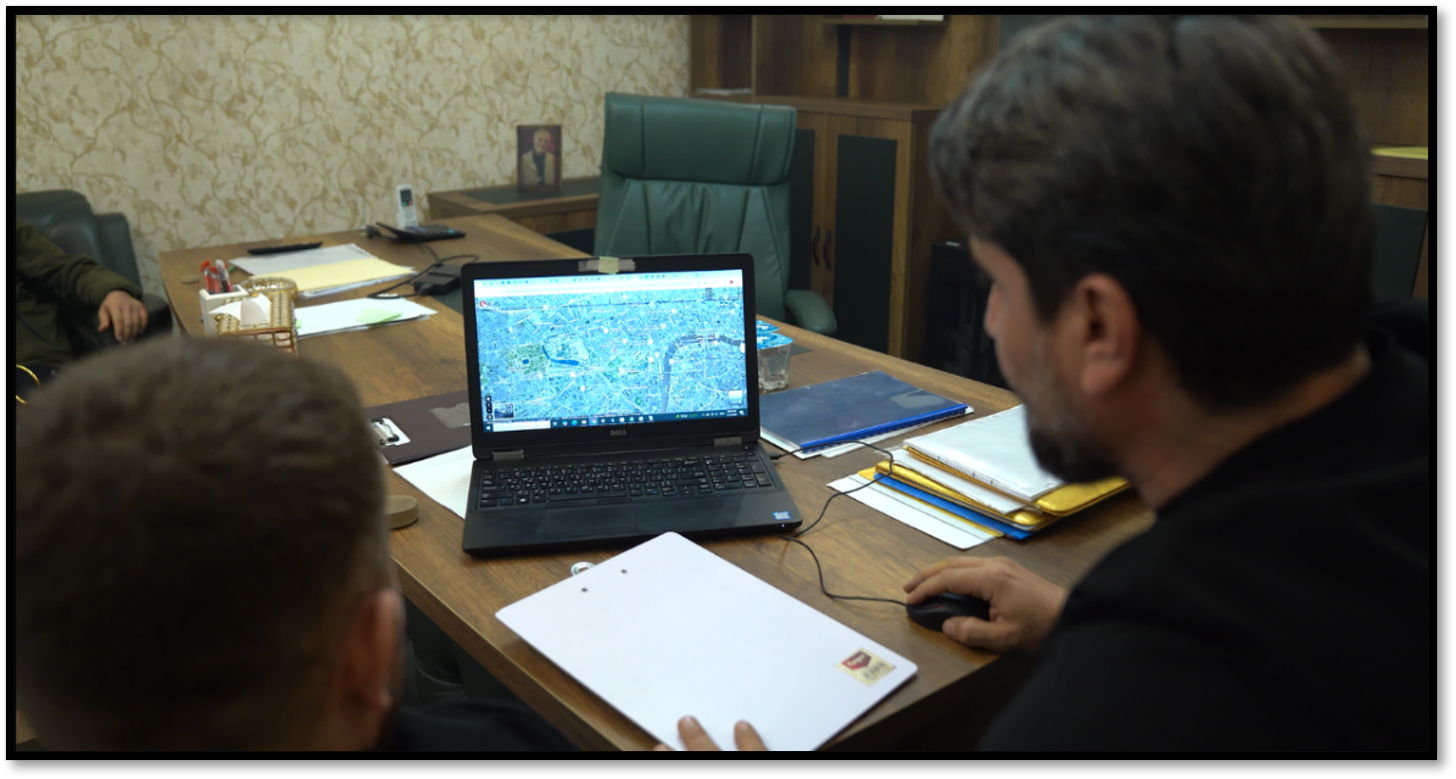
The most remarkable portion of the indictment was the announcement that Al-Saadi, already in jail in New York after being arrested and extradited from Turkey in May 2026, helped coordinate the RAF Fairford plot from jail.
While in prison in New York awaiting trial, AL-SAADI has had phone calls with his immediate family members located in Iraq. As alleged, AL-SAADI used certain of those calls to pass coded messages to MOHAJERI and AL-HASSANI in the days leading up to the RAF Fairford Terrorist Plot.
For example, between in or around June and July 2026, AL-SAADI allegedly spoke with his mother and sister about MOHAJERI. During those calls, they referred to MOHAJERI by various aliases, including “Abbas, Abu Daniel” and “Sayyid Abbas.” AL-SAADI also told his family members that he owed money to MOHAJERI and directed them to pass along messages to MOHAJERI about “work,” a term AL-SAADI regularly used to describe terrorist activity, including on social media posts and in discussions with MOHAJERI about partnering to conduct terrorist attacks. On one of those calls, AL-SAADI also asked his sister, “What are they doing about all our old work?” and asked her whether it had been cancelled or just put on pause. AL-SAADI’s sister responded that “it isn’t cancelled.”
On or about September 24, 2026, AL-SAADI once again spoke with his immediate family by phone. On the call, AL-SAADI allegedly inquired about how AL-HASSANI, whom AL-SAADI referred to as “Ali,” was doing. AL-SAADI’s family informed AL-SAADI that “Ali” had been transferred to the “International Section.” AL-SAADI then allegedly instructed his family to “give him [i.e., AL-HASSANI] money so we can do it.” As described above, three days later, AL-HASSANI orchestrated the RAF Fairford Terrorist Plot.
-US Attorney's Office, Southern District of New York, November 10, 2026.
Takeaways:
For more details about the RAF Fairford Plot see Weekly Significant Activity Report - October 3, 2026.
Al-Saadi’s attempt to orchestrate the RAF Fairford attack from jail was incredibly brazen, but may have also been foolish. Given his role as a Quds Force operative, the US would have dedicated significant resources to monitoring Al-Saadi’s communications while in jail. The coded messages described in the indictment are not especially sophisticated and would likely have triggered further electronic surveillance of his family in Iraq and their broader network, which could have identified the plot. The new revelations raise the possibility that either the chance encounter by a concerned local resident with the attempted attackers outside RAF Fairford, or the mysterious phone call to emergency services from inside one of the attackers’ vans, was tied to authorities’ efforts to monitor the plot.
2. FRANCE ACCUSES IRAN OF CYBER ATTACKS ON GROCERY STORES
On November 9, 2026, French Foreign Minister Jean-Noël Barrot officially attributed a series of cyber attacks on hundreds of French supermarkets to Shahid Kaveh, a threat actor associated with the Electronic and Cyber Center of the IRGC. The attacks destroyed hundreds of millions of dollars worth of fresh and frozen food by raising temperatures in refrigerators and freezers overnight between October 11 and 12.
Takeaways:
Even though France has not joined the US war effort, Iran has nevertheless launched provocations at it and other European countries in order to increase animosity toward Americans for starting the war. France, like the UK, has also been specifically targeted due to its role in triggering the “snapback” of sanctions on Iran in August 2025, as one of the European signatories to the Joint Comprehensive Plan of Action.
France’s attribution raises the likelihood that similar cyber attacks on freezers and refrigeration units reported across several other European countries in recent weeks, including in Belgium, Denmark, Ireland, Luxembourg, and Sweden, are also the work of Iranian hackers. Belgium, for its part, has issued mixed messaging regarding the incidents on its territory with its Interior Minister suggesting the attacks were “very likely” the result of Iranian hackers, while its Foreign Minister provided a more guarded assessment. US military bases have also reported experiencing several cyber attacks on freezers.
3. IRAN’S ASSEMBLY OF EXPERTS ANNOUNCES REASSESSMENT OF DEFENSE POLICY AND NPT
On November 12, 2026, Iran's Assembly of Experts, its supreme clerical body, issued a statement calling for a review of the country’s defense doctrine and its participation in the Nuclear Nonproliferation Treaty (NPT).
Takeaways:
The Assembly of Experts, which supervises Iran’s Supreme Leader, is the only authority, with the exception of Mojtaba Khamenei, that can formally start a process of revisiting the late Supreme Leader Ayatollah Ali Khamenei’s decree prohibiting nuclear weapons. The announced review therefore can be seen as a potential move to clear the way for an official nuclear weapons program.
It’s not yet clear that Iran has changed its calculus on developing a nuclear arsenal as such a move would come with significant trade-offs. An Iranian nuclear arsenal would likely provoke a destabilizing regional arms race that would alarm and alienate its top great power allies China and Russia. Recent Russian actions, including overtures to take possession of Iran’s stockpiles of highly enriched uranium, and its intent to raise the number of specialists at the Bushehr Nuclear Power Plant from 180 to 300 (and possibly to as high as 700), suggest the Kremlin remains keen to deter Iran from developing a nuclear weapon and to keep close eyes on its ongoing nuclear research. Iran’s threats to withdraw from the NPT therefore could be seen as an attempt to increase leverage in negotiations with the US, and to also increase pressure on allies like Russia to provide military assistance that bolsters its conventional deterrence and negates the need for nuclear weapons.
EASTERN FRONT
Significant Activity Related to the War in Ukraine and Russian threats to NATO
4. RUSSIA RESUMES TRILATERAL NEGOTIATIONS WITH UKRAINE AND US
This week Russia and Ukraine resumed US-mediated negotiations in Abu Dhabi between November 10 and 11, 2026. The talks, the first in nine months, ended without a major breakthrough. Following the trilateral negotiations, US Special Envoys Steve Witkoff and Jared Kushner conducted shuttle diplomacy between Russian and Ukrainian leaders, visiting Russian President Vladimir Putin in Moscow, and Ukrainian President Volodymyr Zelensky in Dublin, Ireland. The US envoys subsequently announced progress in involving European representatives in future negotiations.1
Overall, the week of US-mediated diplomacy resulted in a forthcoming large-scale prisoner exchange, but also featured new Russian demands to fundamentally alter the European security architecture, including an apparent call to have Finland withdraw from NATO, and for the alliance to abandon joint military bases in the Baltic States.
Takeaways:
The Kremlin is using the moment when it can convey that it has leverage (resulting from a disoriented White House at odds with Ukraine, and fear over winter devastation in Ukrainian cities) to probe for opportunities to secure new concessions for peace by expanding the scope of the talks to include broader issues of European security. The negotiating strategy follows a well-established pattern of “reflexive control” in Russian diplomacy to manipulate the framing of an issue to split political consensus within NATO. Concerningly, US envoys appear to be taking the bait, seeing Russia’s willingness to enter talks with European leaders as evidence of progress toward peace. When talks collapse Russia will likely move to blame the failure on European and Ukrainian inflexibility.
 Jared Kushner@jaredkushnerPresident Trump today advanced an important discussion with several European leaders about the need for a broader European security architecture that can help establish the conditions for lasting peace. Building on his leadership and the substantive work undertaken this week in…
 One America News @OANNPresident Trump teases a major agreement involving Ukraine and potentially all of Europe. He says the deal will be significant that “everyone’s going to be thrilled.” For more updates, watch OAN on OAN Live or click the link in our bio.2:46 AM · Nov 6, 2026 · 2.26M Views6.02K Replies · 772 Reposts · 3.13K Likes
No evidence suggests that Russia is serious about ending the war right now. The Kremlin appears to believe that an intense bombing campaign against Ukrainian critical infrastructure this winter can improve its position by destroying the Ukrainian economy and spurring new waves of migration that aggravate growing populist tendencies in Europe.


5. ANTI-RUSSIAN HACKERS RELEASE RUSSIAN GOVERNMENT DATA SHOWING 450K WAR DEATHS
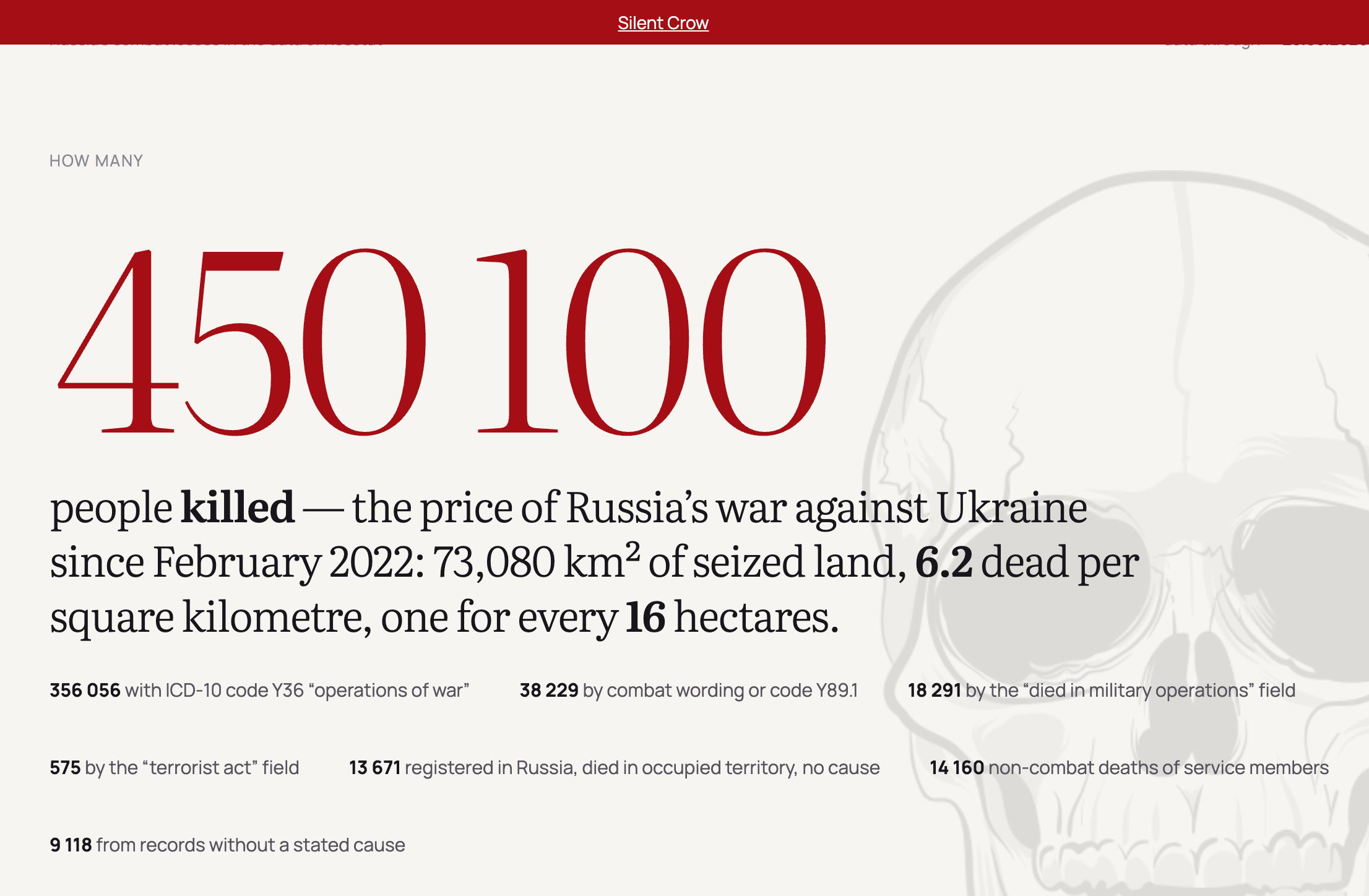
This week pro-Ukrainian hacktivist group Silent Crow and opposition Belarusian hacking group Cyber Partisans released data obtained from Russia’s official statistical agency Rosstat, which purportedly shows over 450,000 Russian deaths incurred so far during the war in Ukraine.
Takeaways:
The death tolls revealed in the Rosstat Leaks, while plausible, notably exceed more conservative tallies by Mediazona and the BBC’s Russia service. As of November 6, 2026, the ongoing Mediazona-BBC investigation identified 285,881 Russian military dead by name and estimated an upper range for the total number of Russian troops killed in action at 352,000.
The purported Rosstat figures also show a significant leap in the number of dead in 2026, with an average of 18,280 Russian troops killed per month between February and August 2026.2
WESTERN PACIFIC FLASHPOINTS
Significant Activity in the Western Pacific and Taiwan
6. NVIDIA CEO RESIGNS AFTER ADMITTING TO AFFAIR WITH SUSPECTED CHINESE SPY
On November 12, 2026, Jensen Huang resigned as CEO of Nvidia days after admitting to an affair with Alice Huang (no relation), an executive for Singaporean AI firm Megaspeed and suspected intelligence asset of the People’s Republic of China.
The admission came after weeks of growing scrutiny of Nvidia and Jensen Huang following revelations from The New York Times that the US intelligence community was monitoring the relationship between the two Huangs due to suspicions of Alice’s ties to China’s Ministry of State Security.
Takeaways:
There have been competing assessments given about Alice Huang’s ties to China’s intelligence and security services, with new reporting by CNN expressing greater uncertainty about her involvement in espionage. This is not entirely unusual. The US intelligence community is composed of 18 agencies and assessments can vary both within and between them. Outside observers, most notably Desmond Shum, have suggested that Alice may be a commercial fixer that enables Chinese businesses to acquire chips. This is also plausible.
Regardless of Alice’s exact role, the facts that are most salient to this case are: first, the relationship between Jensen and Alice Huang appears to have facilitated the acquisition of billions of dollars of advanced Nvidia chips by Chinese companies in violation of US export controls; and second, Nvidia appears to have influenced the US Department of Commerce to ignore concerns about Megaspeed’s role in the illicit chip trade. Both of these factors are troubling developments for US national security.
The immediate consequence of the growing scandal appears to have reinvigorated efforts by China hawks in Congress and the Trump administration to reassert control of policy and pressure the White House to take a more rivalrous approach to US-China relations.
7. NORTH KOREA PUBLISHES UPDATED CONSTITUTION
On November 11, 2026, North Korea published an updated version of its constitution on the state web portal Naenara, after it was taken down in March 2024. The new constitution, which appears to have been drafted during the 15th Supreme People's Assembly in March 2026, features several key changes:
References to reunification with South Korea removed and official territory redefined to include South Korea as a neighboring state
Kim Jong-un given enhanced powers to command and delegate authority over the state’s nuclear arsenal
Supreme People’s Assembly (North Korea’s legislature) stripped of its power to depose the Supreme Leader
Preamble references to previous North Korean Supreme Leaders downgraded
Takeaways:
The details of the new constitution do not come as a complete surprise as it resembles a copy released by South Korea’s unification ministry in May 2026.
The new constitution is significant in that it formalizes the “two-hostile states” doctrine as part of its official governance model for international audiences, but in practice it changes little. The doctrine, which envisions the two Koreas as distinct and permanently separated states, was already enshrined in the charter of the Workers’ Party of Korea during the Ninth Party Congress in February 2026. The Party charter technically outranks the constitution in authority.
The downgrading of the personality cult surrounding his father and grandfather is likely a prerequisite for Kim Jong-un to enact the two-hostile states doctrine as it breaks with decades of state ideology that made reunification with the South the highest goal of the state.
This briefing was compiled by Dan White. Dan is an independent foreign policy analyst based in the New York Metro Area. Dan is a former member of The Wilson Center and The Kennan Institute. Dan holds masters degrees from the Johns Hopkins University School of Advanced International Studies (SAIS), the Naval Postgraduate School, and the University of Washington. Dan is a former officer in the United States Army and a veteran of the War in Afghanistan.
For more information, corrections, or comments, please contact djwhite155@gmail.com.
Current European representation in talks provided by Gen. Alexus G. Grynkewich, Commander, U.S. European Command and NATO Supreme Allied Commander Europe (SACEUR)
The data obtained runs through August 28, 2026.
Each weekend, Dan shares thoughtful, well-researched, balanced analysis of geopolitical developments worldwide. I really enjoy following his work and appreciate the depth of research and perspective he brings to these complex issues. I look forward to this every Sunday morning!