



This week’s analysis highlights some of the most significant geopolitical developments involving America’s adversaries—China, Russia, Iran, and North Korea—between April 25, 2026 and May 2, 2026.
Summary:
Update on the war with Iran: nationwide internet blackout continued; new reports of a struggle for control over negotiations between factions of Iranian leaders; Iranian currency in freefall amid US economic pressure.
Russia has announced a subdued May 9 Victory Day celebration alongside enhanced security measures for the event and ceasefire proposals amid the increased threat of Ukrainian drone attacks.
Russia’s Africa Corps forces suffered significant defeats in Mali.
China conducted unusual naval patrols near Taiwan’s Penghu islands in the Taiwan Strait.
North Korea and Russia celebrated the anniversary of the retaking of the Kursk region with the inauguration of a new memorial museum in Pyongyang highlighting North Korea’s participation in the operation. The new memorial offers new insights into North Korea’s involvement in the war and the future of its partnership with Russia.
1. IRAN WAR UPDATE
Internet Blackout Continues
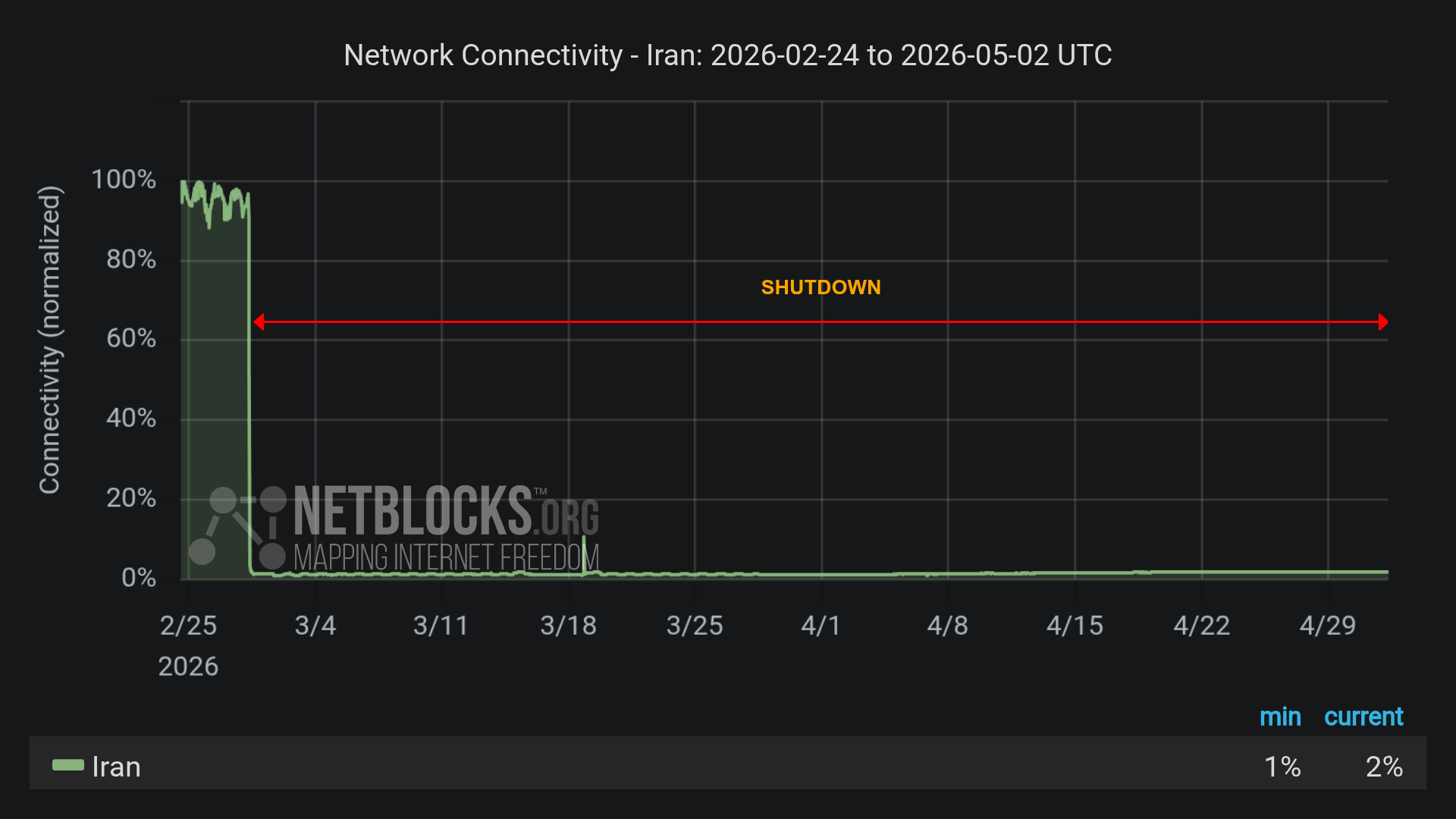
According to internet connectivity monitoring organization Netblocks, May 2 marked 64 days of a near-total internet blackout in Iran.
Leaders Competing for Influence Over Negotiations
According to an April 30 report by Iran International, Iranian President Masoud Pezeshkian and Parliamentary Speaker Mohammad Bagher Ghalibaf are engaged in bureaucratic maneuvering with Foreign Minister Abbas Araghchi whom they view as less pragmatic and more aligned with the hardline factions of the Islamic Revolutionary Guard Corps (IRGC).
Iranian Currency Slides to Record Low
On May 2, the Iranian rial fell to 1.83M tomans to the dollar on the open market, the lowest unofficial exchange rate for the currency ever recorded.
Takeaways:
On May 2, Iranian member of parliament Amirhossein Sabeti appeared to confirm the internet shutdown will continue indefinitely due to fears of a revival of the civil unrest seen in January, “If the internet is fully reopened, some mercenaries, who are also armed, may organize gatherings through these networks.”
-
Despite public bluster from members of the IRGC and low-level officials, the internet blackout—imposed by the Supreme Security Council—is a far more revealing signal as to the regime’s confidence in its standing in the war against the US and Israel. The continued throttling of the internet, which risks at least ten million jobs and the broader health of the entire Iranian economy, indicates that the regime does not believe that the war is either finished or won. Like amputating a limb to combat gangrene, the dramatic countermeasures show that top Iranian decision-makers believe US economic pressure, evidenced in the ongoing currency collapse, is sufficiently destabilizing to require costly measures to prevent civil unrest from reorganizing. Ironically, the longer the restrictions remain in place, the greater the risk that they will compromise the overall health of the Iranian economy and civil society and require additional interventions to manage their fallout over the long-term.The internet blackout is also indicative of broader governance problems facing the regime. As noted in the April 12 Situation Report “Iran’s Strategic Position After 40 Days of Epic Fury,” Iran’s strategy for managing the end of the war faces serious challenges with the lack of a strong central leader who can manage competing factional interests and set a long-term vision for the country going forward. The accuracy of reports claiming Mojtaba Khamenei is involved in critical decisions is belied by the ongoing public bickering between officials over the terms of negotiations, and reports of political infighting between the top members of government including the Pezeshkian, Ghalibaf, and Araghchi.
Caution still needs to be taken in reading these indications of deteriorating governance and economic conditions, however. A collapsing Iranian economy and intense internal infighting will not resolve the basic problems the war poses to the overall global economy and international order. Even a much diminished and disoriented regime will still be able to strangle maritime shipping through the Strait of Hormuz by exploiting the intense risk aversion of maritime shipping companies with the threat of attacks by small and inexpensive drones.
-
A collapsing Iranian economy and continued oil blockade may even further incentivize the regime to focus on monetizing threats to regional security. A hardline regime that survives could put off all economic reform and sustain itself like a Middle Eastern North Korea by extracting concessions from its neighbors for continued regional stability. Such actions could include demanding war-related indemnities well into the future, expanding protection fees on shipping through the Strait of Hormuz, requiring humanitarian aid to prevent large-scale migration and other schemes.
2. RUSSIA DOWNGRADES VICTORY DAY CELEBRATIONS DUE TO FEAR OF UKRAINIAN ATTACKS
Military Equipment Pulled from Victory Day Parades
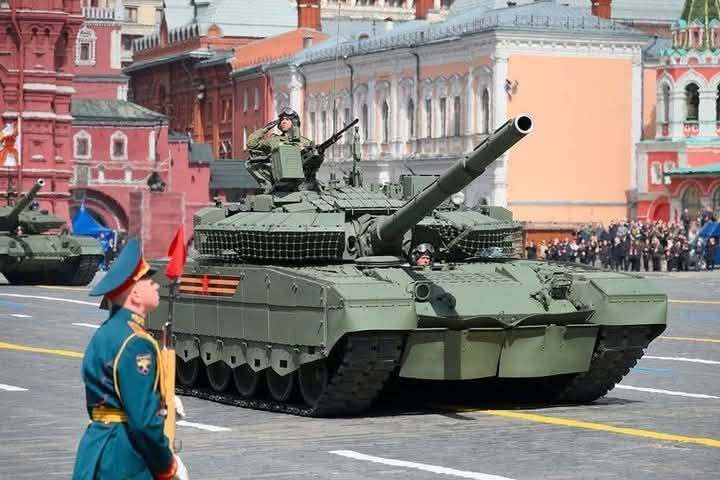
On April 28, the Russian Ministry of Defense announced that this year’s Victory Day Anniversary Parade in Moscow’s Red Square will be held without the participation of military equipment or the military cadets due to the “current operational situation.”
St. Petersburg announced similar restrictions the following day, excluding both museum-piece vehicles and elite military academy cadets from its own celebration.
Putin Proposes Victory Day Ceasefire
On April 29, Russian President Vladimir Putin informed US President Donald Trump of his interest in conducting a temporary truce with Ukraine during the May 9 Victory Day holiday.
Moscow Will Throttle Cellular Networks on May 9
On April 29, the BBC’s Russian Service reported that Russia will restrict all mobile communications in Moscow ahead of the Victory Day parade.
Takeaways:
It is highly unusual that Russia would conduct its Victory Day celebration without the military vehicles in the parade which typically serve as a hallmark of the event. The decision to not include vehicles appears to be motivated less by the lack of availability of vehicles as not even museum pieces will be featured. The other indications, including Putin’s proposal of a one-day ceasefire and rumors of widespread mobile internet restrictions (rather than the more localized restrictions used last year) suggest the Kremlin fears a potential large-scale Ukrainian attack to disrupt the event.
3. RUSSIAN FORCES SUFFER SIGNIFICANT SETBACKS IN MALI
On April 25, units of Russia’s “Africa Corps” serving alongside the Malian army were attacked in a major offensive by a large contingent of rebel Tuareg and Islamist forces. The attacks, which killed the Malian Defense Minister, Sadio Camara, and seized multiple cities throughout the country, also forced the withdrawal of Russian forces from their main base in Kidal and allegedly downed a Russian helicopter with a shoulder-fired missile.
Africa Corps withdraws from its base in Kidal under the white flag of surrender. Source: TopWar.ru
Takeaways:
The setbacks to Russia’s allies in Mali represent another instance of the Kremlin struggling to advance its international interests while it remains consumed by the war in Ukraine. Russian “peacekeepers” previously failed to either deter or halt lightning offensives by Azerbaijan against Armenia’s disputed Nagorno-Karabakh region in September 2023, and by rebel forces against the Assad regime in Syria in December 2024.
The debacle in Mali is also an indication that the Kremlin’s effort to centralize control over the former Wagner Group’s activities since the Prigozhin-led mutiny of 2023 is not leading to a more coherent integration of Russia’s activities in Africa into Russia’s broader national security apparatus. The Africa Corps’ quick capitulation to rebel forces was preceded by previous catastrophic battlefield defeats, which demonstrates broader problems in Russia’s ability to conduct expeditionary operations and deploy combat power abroad.
-
An April 26 public rebuke issued by the Africa Corps regarding an “ambiguous” statement about its role in Mali by the Russian Ministry of Defense also indicates that the supposed takeover and rebranding of the organization has still not completely extinguished the resentments of the former Wagner Group.
4. CHINESE WARSHIPS PATROLLING NEAR TAIWANESE ISLANDS
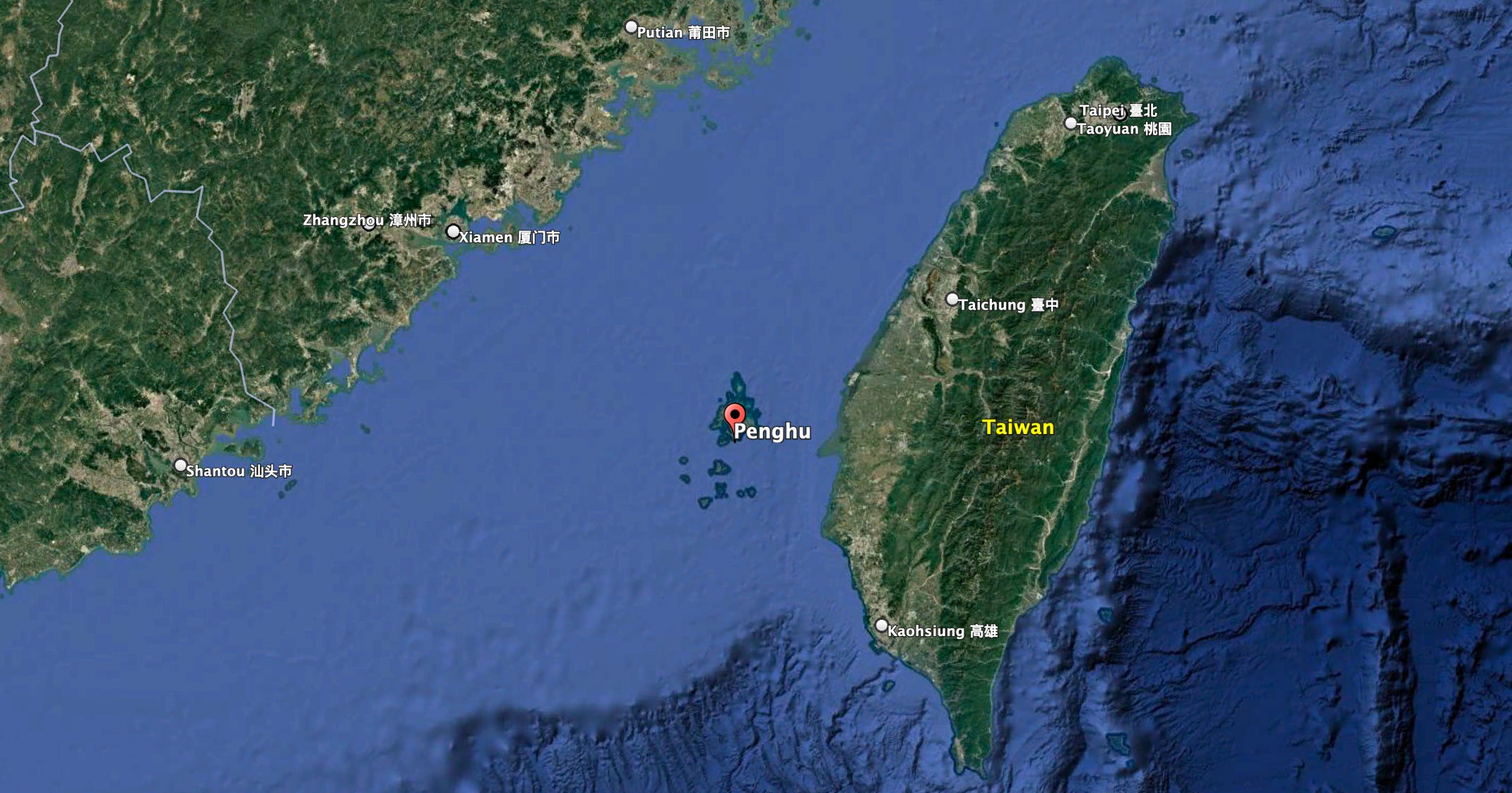
On April 27, Taiwan’s Ministry of National Defense announced that it has been tracking two Chinese warships, a Type 052C Destroyer CNS Zhengzhou and a
Type 054A Frigate CNS Hebi, operating near the Penghu islands in the Taiwan Strait.
Takeaways:
The patrol represents an especially close approach by Chinese ships to Taiwanese territory and is the latest noteworthy Chinese naval operation near Taiwan in recent weeks. The moves coincide with a reduced US naval presence in the Indo-Pacific resulting from the demands of the war against Iran. Despite the increased profile of People’s Liberation Army (PLA) Navy operations, and more limited US capability in the region, it is highly unlikely that China is preparing for any military action against Taiwan in the foreseeable future.
According to the 2026 Annual Threat Assessment of the US Intelligence Community published in March, “The IC [intelligence community] assesses that Chinese leaders do not currently plan to execute an invasion of Taiwan in 2027, nor do they have a fixed timeline for achieving unification.” China is still likely years away from assembling a force capable of seizing Taiwan, and recent Chinese military publications suggest the PLA Navy is still evaluating the needs of such a force to cope with the evolving asymmetric military capabilities that have played a significant role in contesting the maritime domain in both the war in Ukraine and in the Middle East.
5. NORTH KOREA AND RUSSIA CELEBRATE AND EXPAND MILITARY ALLIANCE
Russian Delegation Attends Opening of New North Korean War Memorial and Vows to Expand Military Cooperation
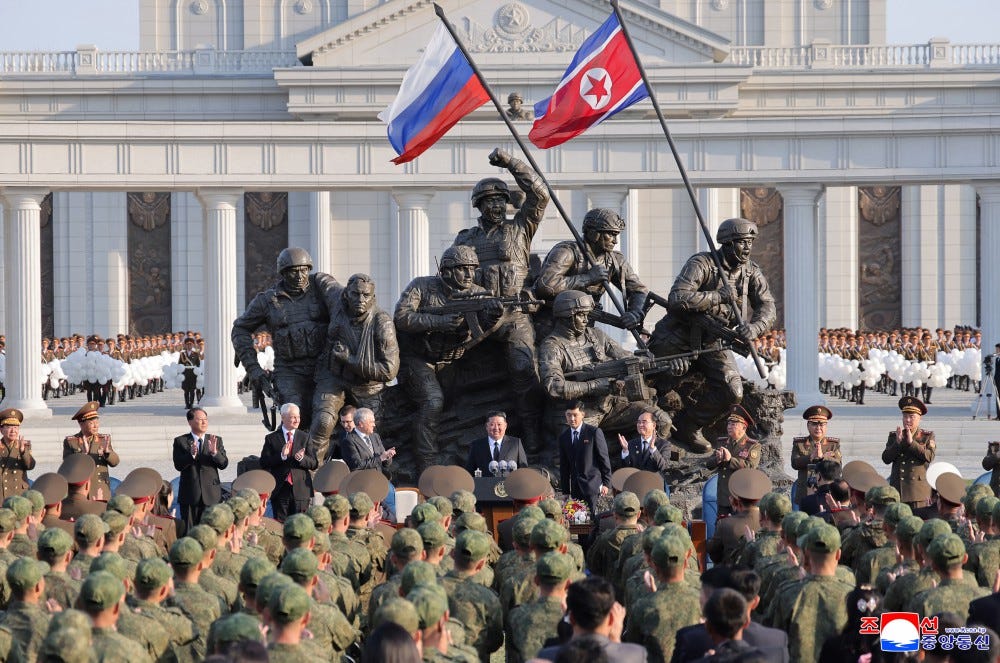
This week a high-level Russian delegation led by Defense Minister Andrei Belousov and Speaker of the Russian State Duma Vyacheslav Volodin visited Pyongyang to celebrate the opening of the “Memorial Museum of Combat Feats for Overseas Military Operations” dedicated to North Korea’s participation in Russia’s war against Ukraine.
In a follow-on meeting with North Korean Supreme Leader Kim Jong-un on April 27, Defense Minister Belousov suggested that Russia is prepared to upgrade military ties with North Korea over agreements and cooperation already taking place under the Treaty of Comprehensive Strategic Partnership.
“[The Russian Defense Ministry] and the Defense Ministry of the DPRK agreed to switch military cooperation to the lasting long-term basis. We are ready to sign a plan for Russian-Korean military interaction for 2027-2032 this year.”
Kim Jong-un Confirms Death Before Surrender Policy for North Korean Troops
At the April 27 inauguration of the Memorial Museum of Combat Feats for Overseas Military Operations, North Korean Supreme Leader Kim Jong-un appeared to confirm a suspected policy of suicide before surrender for North Korean troops deployed to Russia. Kim praised soldiers for heroically “self-blasting.”
North Korean Death Toll in War
An analysis of recent footage of the dedication of North Korea’s new war memorial by NK Pro has identified 2,288 individual names being memorialized, providing a rare glimpse into the battlefield losses acknowledged by North Korea.
Takeaways:
A figure of roughly 2,300 dead lines up with previous estimates of 6,000 total North Korean casualties (both dead and wounded) in the war provided by South Korea’s National Intelligence Service (NIS).1 It is still not clear if this represents the final total number of war dead as North Korea understands it or just the number it is prepared to acknowledge now. Kim Jong-un’s open boasting about soldier suicide suggests he is confident that the military operation is a historic success, and that its high costs can be acknowledged as a source of pride rather than buried as a state secret. North Korea may have a further incentive to highlight rather than downplay the true total number of casualties in order to emphasize to Russia its value as an ally and its entitlement to additional military and economic rewards.
While the exact details of the proposed expansion of long-term military ties between Russia and North Korea remain murky, we should expect any new agreement to include substantive follow through from both parties given the progression of their ties since the start of the full-scale invasion of Ukraine.
-
One likely form of cooperation involves Russian technical assistance to North Korea’s drone program in exchange for increased North Korean labor in Russian drone factories. It has previously been reported that North Korea was preparing to send thousands of workers to Russia’s drone super factory in Tatarstan’s Alabuga Special Economic Zone. It is unclear whether these plans have yet materialized, and renewing them could be mutually beneficial. The Russian military has enormous demand for drones but faces significant labor shortages it needs to overcome to scale production. It has tried multiple schemes to recruit new workers by enticing foreigners and even children to work at Alabuga as part of vocational skills training programs like “Alabuga Start”.2 North Korean workers could fill the gap for Russian manufacturers and then use the knowledge and skills gained to upgrade the North’s own factories.
-
Russia could also become involved in helping the North implement the kind of modern reconnaissance strike complex against South Korea that it has employed against Ukraine. Reports that Russia provided targeting assistance to Iran to use against the US suggest the Kremlin may have an interest in developing a similar threat on the Korean peninsula. Russia would use the increased drone threat in North Korea to both gain leverage over the US in negotiations to end the war in Ukraine and to keep the focus of the American military divided between multiple evolving threats in the Middle East and Indo-Pacific.
This briefing was compiled by Dan White. Dan is an independent foreign policy analyst based in the New York Metro Area. Dan is a former member of The Wilson Center and The Kennan Institute. Dan holds masters degrees from the Johns Hopkins University School of Advanced International Studies (SAIS), the Naval Postgraduate School, and the University of Washington. Dan is a former officer in the United States Army and a veteran of the War in Afghanistan.
For more information, corrections, or comments, please contact dan@opforjournal.com.
This estimate of 6,000 total dead and wounded issued by the NIS in February was recently reported as 6,000 dead in multiple Western media outlets. It is unclear if this is a revised estimate or a reporting error.
A program directly aimed at recruiting women from Africa and South Asia