


On April 11, the US and Iran held their highest-level diplomatic talks to date in Islamabad, Pakistan, following a ceasefire announced on April 7 that ended more than five weeks of combat.1 This Situation Report discusses Iran’s strategic position going into negotiations, and assesses how it may press its advantages and why it may be wise to seek a negotiated settlement.
This Situation Report is broken into two parts:
Iran’s Strategic Advantages
The War Has Imposed Significant Operational Costs on US Military
Iran Maintains Ongoing Control of the Strait of Hormuz
Iran Continues to Pose Significant Threat to Gulf Infrastructure
Iran Has Maintained Regime Integrity and Internal Stability
Iran Has Established an Upper Hand in the Information Space
Iran’s Strategic Vulnerabilities
Iran’s Control Over the Strait of Hormuz has Peaked
War Has Worsened Iran’s Internal Crises
1. IRAN’S STRATEGIC ADVANTAGES
The Iranian regime has survived 40 days of intense US strikes and re-entered negotiations confident that its strategic position has improved from before the war. Iran’s confidence derives from the success it has achieved in imposing significant operational costs on the US military, exerting control over the Strait of Hormuz, holding critical infrastructure at risk across the Middle East, warding off the threat of regime change, and establishing an upper hand in the information war.
The War Has Imposed Significant Operational Costs on the US Military
Iran has been able to impose non-negligible costs to the US military through five weeks of war, which have triggered serious questions about the sustainability of the US war effort including souring public opinion and concerns about the deficiency of the US defense industrial base’s capacity to sustain a protracted military campaign.
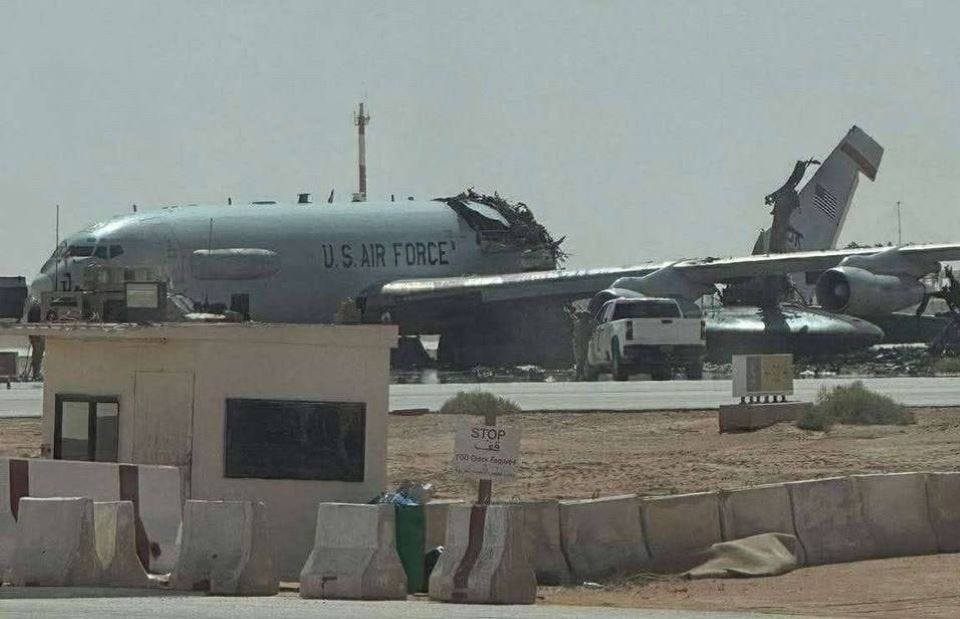
Iranian attacks have killed 13 US service members, and wounded 381. The war resulted in the loss of 39 US aircraft, including an E-3G Sentry Airborne Warning and Control System (AWACS), damage to an additional 10 aircraft, and the destruction of multiple sophisticated air defense radars. Defending against Iranian drone and missile attacks has depleted about a third of the US’s stocks of interceptors for the Terminal High Altitude Area Defense (THAAD), and a quarter of its supplies of Patriot Missiles.
Iran Maintains Ongoing Control over the Strait of Hormuz
Iran has succeeded in imposing total control on traffic through the Strait of Hormuz. Its indiscriminate strikes on targets throughout the region, while in some ways strategically counterproductive, ultimately succeeded in shutting down maritime traffic through the Strait. There are three reasons Iran has succeeded so far:
First, Iran demonstrated enough capability and willingness to attack commercial ships that shipping companies ultimately became extremely risk averse. While the US and Israel did succeed in degrading Iran’s capability to deploy sea mines and launch strikes on ships, Iran launched enough mines into the water and enough successful drone and missile attacks on tankers to ensure that no ship owners would risk transiting the Strait unless they received special security assurances to do so. The narrow shipping lanes, approximately two miles wide, located within range of a variety of land-based weapons systems also provided Iran with a narrow enough target area near its shores to effectively threaten with even severely degraded military capabilities.
Second, receiving Iranian permission to cross the Strait became the essential security assurance as no attempt has been made to force open the waterway thus far. The US Navy has only just begun attempting freedom of navigation operations in the Strait on April 11 amid the ongoing ceasefire, either because it deployed unready to do so, or because policy makers previously believed the operation was too risky. It remains to be seen whether the operations will continue if hostilities are renewed or whether they have an impact on restoring confidence in civilian mariners. The US and its allies have also not provided ship owners with sufficient supplementary insurance coverage to offset the increased risk either.
Source: CBS News on YouTube
Third, an overlapping reason behind both Iran’s capability to instill risk in maritime shipping operations, and the US Navy’s unwillingness to assume risky operations, is advances in unmanned weapons systems. The US’s air campaign has degraded Iran’s ability to launch missiles and deploy sea mines, but has not stopped the threat posed by drones. The US military, despite ample warning, has found defending against Iranian drones more difficult than conventional missiles.
Iran Continues to Pose a Threat to Gulf State’s Critical Infrastructure
The persistent threat posed by Iranian drones, and the US military's inability to effectively counter them, has further enabled the regime to restrict American operations by holding the critical infrastructure of Gulf State allies at existential risk.
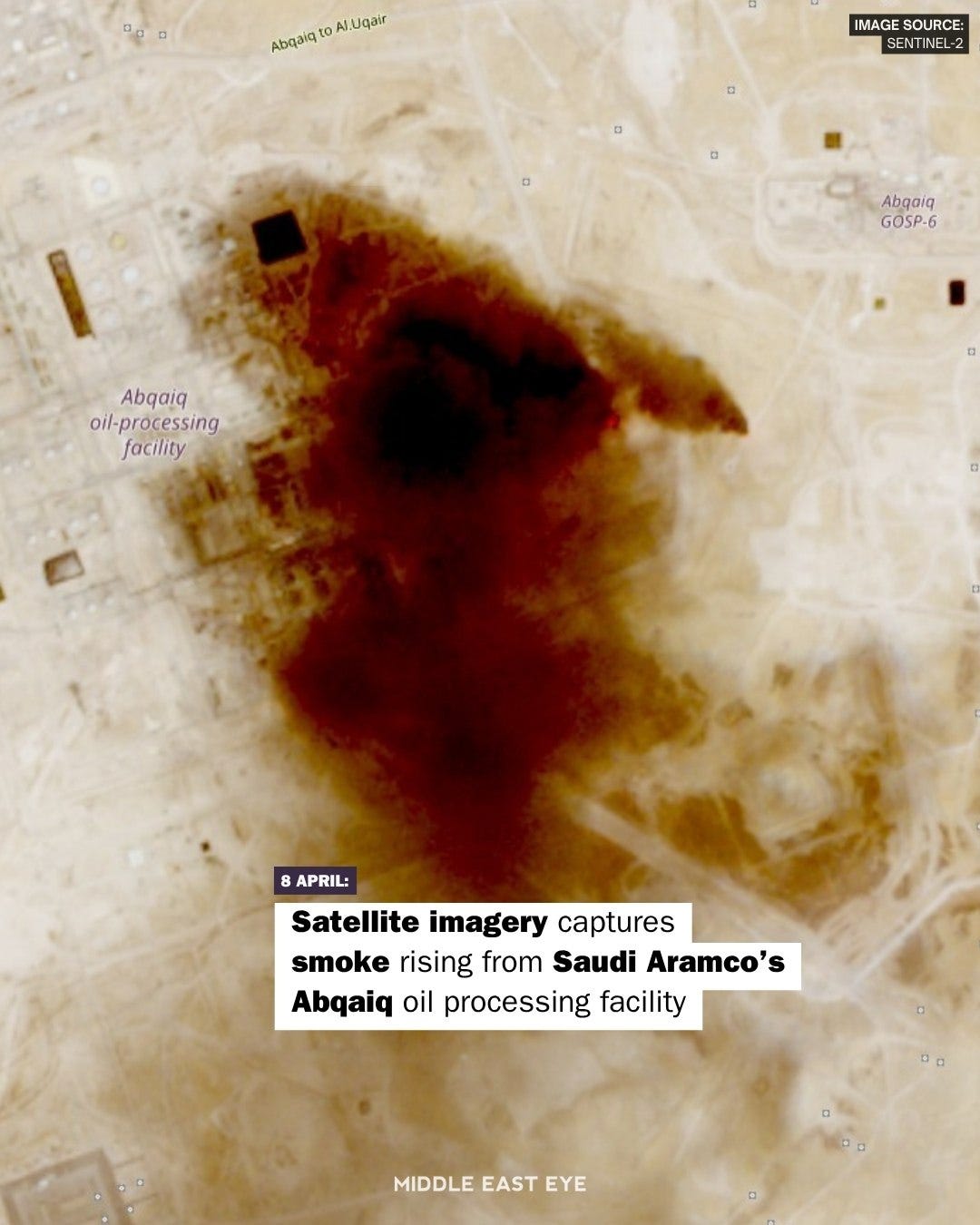
Iranian strikes have targeted oil fields, pipelines and refineries throughout the Middle East. Iranian attacks have notably caused long-term disruptions to 5% of Saudi Arabia’s oil production and 17% of Qatar’s production of liquefied natural gas. The attacks have also caused extensive damage to ports and energy infrastructure in Bahrain, Iraq, Kuwait, Oman, and the United Arab Emirates (UAE).
More worryingly, Iran has also begun limited attacks on desalination plants including in Bahrain, Kuwait and the UAE and threatened further strikes in retaliation for US bombing of its own critical infrastructure. According to an analysis by Reuters, the region is nearly completely dependent on desalination plants for freshwater, with 100% of potable water in Bahrain and Qatar coming from desalination, as well as 90% for Kuwait, 86% for Oman, 80% for the UAE, and 50% for Saudi Arabia.
As a result the US will have difficulty effectively following up on threats to coerce Iran to reopen the Strait of Hormuz or surrender its nuclear program by exploiting Iran’s own critical vulnerabilities, such as by destroying its capacity to export oil from Kharg Island.
Iran Has Maintained Regime Integrity and Internal Stability
Despite continued attacks on its central leadership and sources of state power, the Iranian regime has succeeded in preventing another popular revolt, and closed off opportunities for the US to achieve victory through regime change through airpower alone. Reasons for the sustained internal stability are likely threefold:
First, Iran’s brutal suppression of protests in January killed and arrested unprecedented numbers of people. Credible estimates for the number of protesters killed range between 7,010 and more than 30,000. The crackdown injured an additional 25,845 protesters and resulted in at least 53,845 arrests. These actions could have crippled the Iranian public’s ability to mount another major challenge to the government by directly eliminating the threat posed by more than 100,000 people willing to confront the authorities, and instilling enough fear in countless others to deter further protest organizing.
Second, Iran has been able to maintain the appearance of government control through continued operations of internal security forces amid US and Israeli bombardment. Iranian proxy forces, which have by themselves not been a decisive factor in combating the US and Israel in this round of fighting, have nonetheless played a significant role in bolstering the public presence of the regime’s internal security forces and helped keep a lid on internal threats.
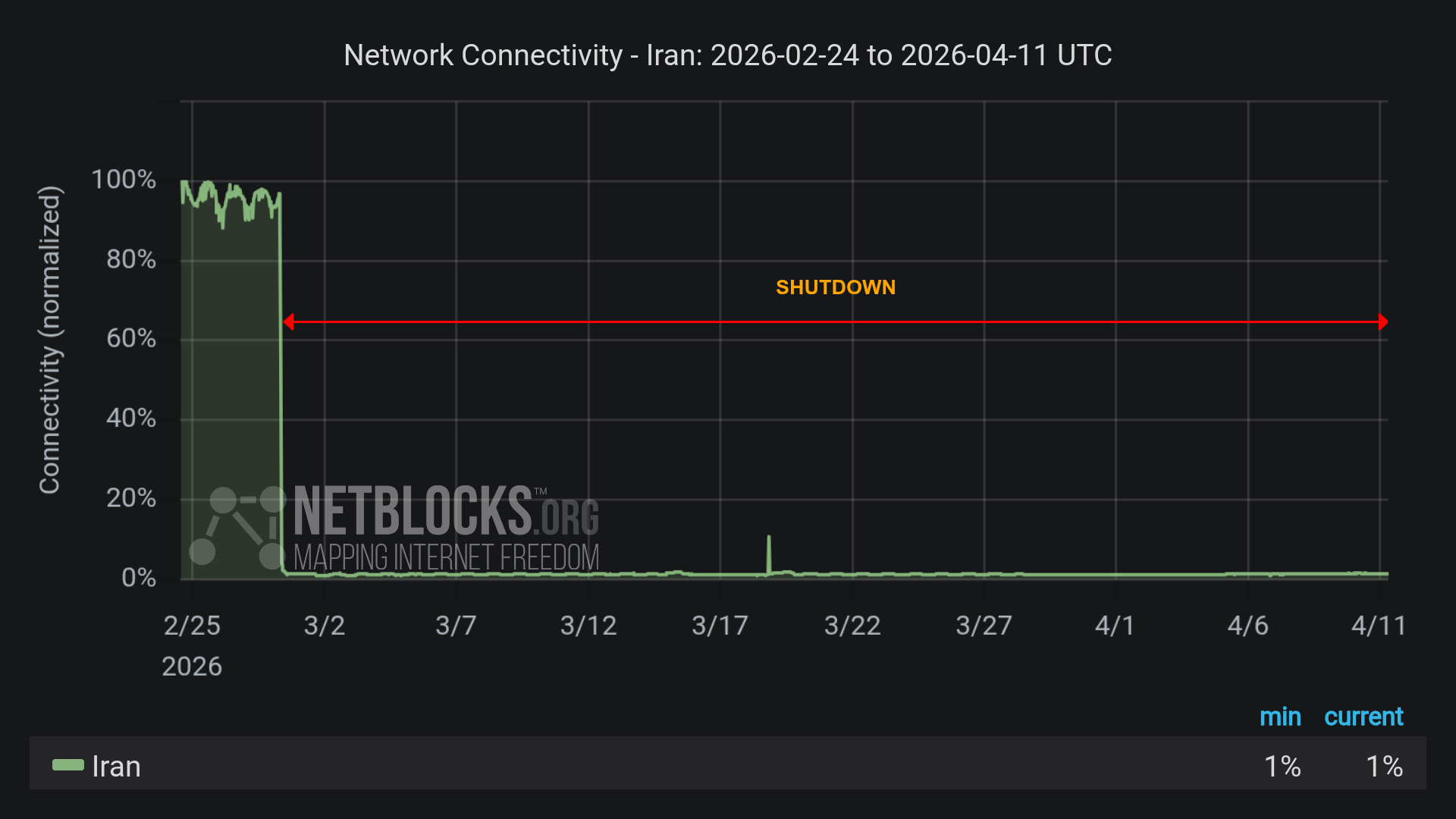
Finally, Iran has instituted a near total internet blackout since the start of the war. According to independent internet monitoring organization Netblocks, the Iranian regime has shutdown internet connectivity in the country for 43 days as of April 11. The current restrictions are likely the most extensive and prolonged imposed by any government since the Arab Spring. The restrictions have further suppressed the ability of remaining protesters to organize any new public uprising against the regime.
Iran Has Established an Upper Hand in the Information Space
Iran’s control of the internet has not only suppressed anti-government activities but has just as importantly prevented internal dissent from leaking out into the wider world. This has helped the Iranian regime maintain the appearance of national unity and resistance against the US and Israel and has helped it establish the upper hand in the information war against both countries.
The Iranian regime has further used its resilience to frustrate US leaders and trigger major unforced errors in the process. The regime’s willingness to accept severe blows to its central leadership without surrendering has posed a dilemma to US policy makers of either continuing an indecisive and expensive air campaign or committing to a more risky and expansive campaign inside Iranian territory that the US public is not prepared to accept.
The dilemma, worsened by Iran’s strangling of global energy and commodity markets through the Strait of Hormuz, appears to have caused US President Donald Trump to attempt to break the impasse through escalating threats to indiscriminately attack Iranian critical infrastructure to break the will of the regime. These threats culminated shortly before the April 7 ceasefire with the President’s declaration that future US military strikes would be aimed at destroying Iran as a civilization. The President’s statements created a global uproar that seriously alarmed US allies, eroded public support for the war in the US, and threatened to cede the moral high ground to a regime whose mass killing of innocent civilians in December and January was itself a major precipitating cause of the war.
The White House's erratic messaging has effectively undermined its justification for war—that a government willing to murder tens of thousands of its own people is too dangerous to be entrusted with the ability to build a nuclear weapon.
2. IRAN’S STRATEGIC VULNERABILITIES
While its current leverage going into the next round of diplomatic negotiations is considerable, Iran needs to be careful not to try to press its advantage too far. A long war, while undesirable for the US, would be increasingly ruinous for the regime and would cause its current strategic advantages to erode over time. This is chiefly because Iran’s current ability to control the Strait of Hormuz has likely peaked, and its ongoing internal stability is unlikely to last due to the mounting economic costs of the war and long-term disagreements about policy.
Iran’s Control Over the Strait of Hormuz has Already Peaked
Fewer than 10 ships have been able to transit the Strait of Hormuz each day amid the ongoing ceasefire, down from almost 130 per day in the month before the war. For all intents and purposes, it’s unlikely that the Strait will get any more closed than it is already. Iran’s partners like China will not tolerate measures to affect a more permanent long-term closure, such as widespread and indiscriminate mining (an action which may no longer be feasible anyway due to the US’s destruction of much of Iran’s fleet of minelayers).
The costs of accepting a negotiated settlement in which Iran continues to threaten traffic through the Strait will be difficult, even for an impatient US administration apprehensive about continuing the war to accept. Iran’s continued strangling of maritime traffic may inadvertently force the US to increase military deployments to the region and attempt dramatic combined arms operations to force the Strait open.
The transit of two US destroyers through the Strait of Hormuz on April 11, followed by a US Central Command statement announcing the beginning of operations to clear new shipping lanes in the Strait suggests the US is preparing for more aggressive naval action to re-establish control in the region. The move, likely timed to coincide with negotiations, is a warning to Iranian leaders that its leverage over the Strait will be contested and is likely to diminish over time in the absence of a negotiated settlement.
The War Has Worsened Iran’s Internal Crises
Battling the US and Israel has helped bolster the regime’s sense of purpose, but the war has fundamentally undermined Iran’s state capacity. While the Iranian regime maintains a monopoly on violence in the country, the war has ultimately weakened its overall military strength, by devastating its air force, air defenses, navy, and missile stocks.
Operation Epic Fury has been one of the most intense air campaigns in history. According to Pentagon estimates, the US military has struck 13,000 targets in 40 days including:
1,500 air defense targets representing 80% of Iran’s air defense systems
More than 450 storage facilities for Iranian ballistic missiles and 800 storage facilities for attack drones.
150 naval vessels representing 90% of the regular Iranian fleet
50% of the Islamic Revolutionary Guard Corps (IRGC) Navy's small attack boats
20 Iranian naval production facilities
80% of facilities associated with Iran’s nuclear industry
90% of Iran’s weapons factories, including 80% of its missile factories
While some skepticism of the exact figures the Pentagon has provided is warranted, particularly given the current administration’s penchant for exaggeration and hyperbolic language, other independent analyses also assert extensive devastation of Iran’s military and defense industry. Rebuilding the capabilities lost in the war will take many years and may not even be achievable under the current international sanctions. Destruction across the entire supply chain for Iran’s missiles will likely force Iran to suspend production of ballistic missiles and focus efforts on producing smaller drones. While still problematic for regional security—given the effectiveness of drones in the current war—the dismantling of Iran’s missile production capacity would ultimately undermine its ability to assemble a viable nuclear arsenal.
The war has further battered Iran’s infrastructure and overall industrial capacity and will worsen the economic and potentially even the environmental crises that precipitated the December and January uprising against the government. A report by Al Arabiya suggests Iran has sustained as much as $145B in damage, equivalent to about a third of its entire GDP.
Iran’s largest bridge, the B1, connecting Tehran and Karaj destroyed by US strikes. Source: The Sun
The Iranian regime has nevertheless been able to ride out the onslaught in the short-term, but its current survival strategy may create unanticipated challenges to recovery. A combination of initiative and decentralization have been key reasons for the regime’s resilience amid popular upheaval and war. However, the regime’s future continuity depends on reversing these trends toward a restoration of central authority.
Reimposing top-down control of the country—a necessity in any authoritarian system—will be especially challenging given intensifying clashes between pragmatists and hardliners within the regime over policy and the terms of an enduring peace. The institution that would ordinarily serve as arbiter of such conflicts, the position of Supreme Leader, is now a key liability due to uncertainty about the status of Mojtaba Khamenei. While there are conflicting reports about the health of the new Supreme Leader, including that he is either incapacitated, or alert but severely wounded, the fact remains that the central authority in the country has not appeared in public in any form since the war began and has communicated entirely through written messages. Such an absence would raise serious questions about legitimacy for any leader, but it is especially striking in this case given that the current Supreme Leader had almost no public profile before his appointment and has made no public appearances since. A long-term absence by the Supreme Leader could cause the mounting governance challenges and disputes over policy to metastasize into open factional conflict.
This briefing was compiled by Dan White. Dan is an independent foreign policy analyst based in the New York Metro Area. Dan is a former member of The Wilson Center and The Kennan Institute. Dan holds masters degrees from the Johns Hopkins University School of Advanced International Studies (SAIS), the Naval Postgraduate School, and the University of Washington. Dan is a former officer in the United States Army and a veteran of the War in Afghanistan.
For more information, corrections, or comments, please contact dan@opforjournal.com.
The first round of negotiations concluded after 21 hours without a breakthrough and it is unclear at this time if and when they will resume.
The strategic position after 40 days is best understood through what Iran preserved rather than what it lost. The nuclear program is intact — no inspectors, no verified dismantlement. The IRGC proxy network is damaged but operational — Hezbollah still armed, Houthis still active, Iraqi militias still present. The missile program took hits but the missile cities are already being cleared. Iran entered this conflict as a regional power with nuclear ambitions and exits the 40-day pause as exactly that — with the added leverage of having demonstrated it can close the world’s most important chokepoint and survive. That is not a defeated country. That is a country that just ran the most expensive proof of concept in modern Middle East history.