



This week’s analysis highlights some of the most significant geopolitical developments involving America’s adversaries—China, Russia, Iran, and North Korea—between October 17, 2026, and October 24, 2026.
Executive Summary:
US War with Iran - Significant Activity Related to the US-Iran War
The Iranian Parliament confirmed Mehrdad Akhlaghi Ketabchi, the architect of the IRGC’s missile program, as the country’s new Defense Minister.
Iran announced a forthcoming Persian Gulf Data Authority to take enforcement action against US technology companies that operate in the Middle East.
The Eastern Front - Significant Activity Related to the War in Ukraine and Russian Threats to NATO
New reports highlighted expanding Russian maritime gray zone operations across the Black and Baltic Seas and Arctic.
Western Pacific Flashpoints - Significant Activity in the Western Pacific and Taiwan
China conducted numerous maritime incursions near Taiwan, with the Taiwan Coast Guard observing an expansion of maritime militia activities into the Western Pacific.
US WAR WITH IRAN
Significant Activity Related to the US-Iran War
1. NEW IRANIAN DEFENSE MINISTER CONFIRMED
On October 18, 2026, the Iranian Parliament confirmed Mehrdad Akhlaghi Ketabchi as the country’s Minister of Defense and Logistics of the Armed Forces. He succeeds Aziz Nasirzadeh, who was killed by US-Israeli strikes on February 28, 2026.
Akhlaghi is an engineer who has spent four decades in Iran’s defense sector. He played a key role in the development of Iran’s missile arsenal as head of the Shahid Bagheri Industrial Group, the Aerospace Industries Organization and the Defense Industries Organization.
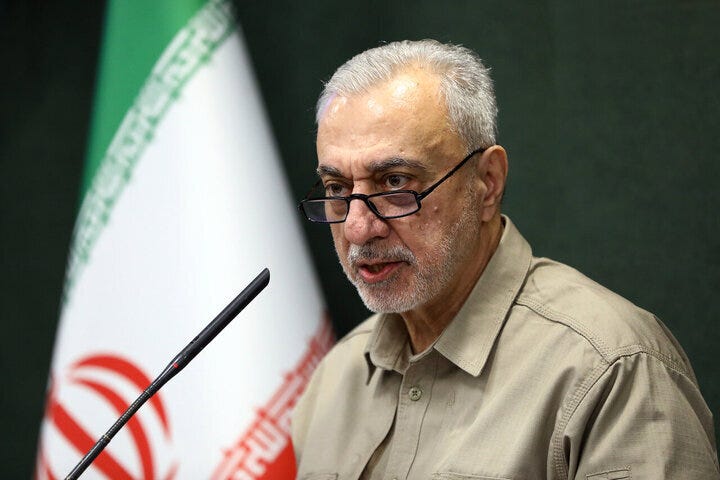
Akhlaghi provided a 16-point plan to the Iranian parliament prior to his confirmation that listed the following priorities to be completed within the next 22 months:
“…strengthening air defense, continuous monitoring of threats and updating military equipment, rebuilding industrial infrastructure, developing emerging technologies, and increasing the participation of the private sector and knowledge-based companies…pursuing the allocation of 100,000 housing units to armed forces personnel, improving the livelihood and medical conditions of personnel and retirees, and promoting the economic health and productivity of the Ministry of Defense.”
Takeaways:
Akhlaghi is known as the architect of the Islamic Revolutionary Guard Corps (IRGC) missile program. His elevation signals that ballistic missiles will remain the core of Iran’s conventional military deterrent despite rapid advances in Shahed drones and other less costly unmanned systems. Akhlaghi’s proposals to “strengthen air defenses” and develop “real-time monitoring” systems will also likely be built off the back of the Iranian missile industry. Noting that Iran’s insufficient defense against aerial strikes has left its leaders vulnerable, Akhlaghi may intend to develop indigenous air defense missile systems adapted from offensive missile systems. “Real-time monitoring” systems also likely refers to indigenous satellites, systems that ultimately need to be launched into space by large rockets. In short, Akhlaghi’s technical experience will be useful in addressing several of Iran’s top national security challenges.
Akhlaghi has suggested he plans to replenish the country’s missile arsenal, develop new longer-range missiles and create more resilient production systems, all while moving production into new underground facilities rather than rebuilding destroyed factories, telling the Iranian parliament, “We will not build new factories in previous locations; instead, we are constructing them inside mountains and fortified underground structures.” Achieving these ambitious goals in conjunction with the development of other advanced military technologies such as air defense systems and satellite systems in the next two years will be extremely challenging given the damage the war and ongoing naval blockade have inflicted on the Iranian economy.
2. IRAN TEASES NEW SCHEME TO THREATEN UNDERSEA CABLES
On October 18, 2026, Speaker of the Iranian Parliament Mohammad Bagher Ghalibaf announced a forthcoming “Persian Gulf Data Authority” to take enforcement actions against technology companies that operate in the Middle East and use submarine cables transiting the Strait of Hormuz. The new organization appears to be modeled after the so-called “Persian Gulf Strait Authority” that demands payments for safe passage through approved Iranian shipping lanes in the Strait of Hormuz.

Takeaways:
The newly announced organization comes after months of previous suggestions by hardline Iranian leaders and media outlets that Iran should extract protection money from tech companies and regional countries for the safety of undersea cables. The actual execution of this extortion scheme is not as clear cut as that targeting commercial shipping through the Strait of Hormuz. The undersea cables crossing the waters near the Strait of Hormuz provide less than 1% of global internet bandwidth, making the chokepoint far less vital to the global internet than it is to global energy markets. Further, undersea cables can be relaid and relocated much more easily than oil and gas pipelines. This ease of relocation could cause Iran’s attempts to damage or tamper with cables to backfire and lead companies to simply route the global internet around Iran.
Rather than a plan for literal tolls for the safe passage of data across the Strait of Hormuz, the announcement of the Persian Gulf Data Authority may be mostly an effort at coercive diplomacy to deter the US from resuming high-intensity military operations by threatening the multibillion dollar investments US tech companies have made in the Middle East. Ghalibaf and other Iranian leaders may hope that pressure on US tech leaders—many of whom are powerful political donors—will cause the White House to delay or rethink plans to resume bombing.
A week before Ghalibaf’s announcement, Mohsen Rezaei, the Secretary of Iran’s Supreme National Security Council, suggested Iranian strikes could threaten as much as $2 trillion in US technology infrastructure including “many cables, data centers and artificial intelligence facilities.” It is not clear how Rezaei arrived at the $2 trillion figure, but Iran has targeted and caused significant damage to multiple US data centers in the Middle East in previous rounds of strikes.
EASTERN FRONT
Significant Activity Related to the War in Ukraine and Russian Threats to NATO
3. RUSSIAN MARITIME AGGRESSION EXPANDING ACROSS THE BLACK AND BALTIC SEAS AND ARCTIC
Suspected Russian Drone Sinks Cargo Vessel Off Romanian Coast
On October 23, 2026, a suspected Russian drone struck and sank the Comoros-flagged cargo ship Khoryv, 13 nautical miles off the coast of Romania. The attack killed at least one crew member, with three still reported missing.
The incident was the seventh reported Russian-linked drone attack on commercial shipping near the coast of Romania and Bulgaria in the past two weeks. The attacks have resulted in 30 mariners reported dead or missing.
The alleged remains of the Khoryv after being struck by a suspected Russian drone. Source: Astra (@astrapress) on Telegram
Russian Entities Buying Properties Near NATO Bases and Infrastructure
On October 20, 2026, The Telegraph published an investigative report that found that Russian and Belarusian-linked entities have purchased hundreds of properties in Nordic and Baltic countries near critical infrastructure or military facilities.
Properties of specific concern include the purchase of a property near Sweden’s Muskö naval base by a Russian oligarch, Russian-linked properties near Šiauliai Zokniai and Panevėžys Pajuostis airbases in Lithuania, and near Bardufoss airbase in Norway.
Russian Fishing Trawlers are Helping the Kremlin Map Undersea Cables in the Arctic and North Atlantic
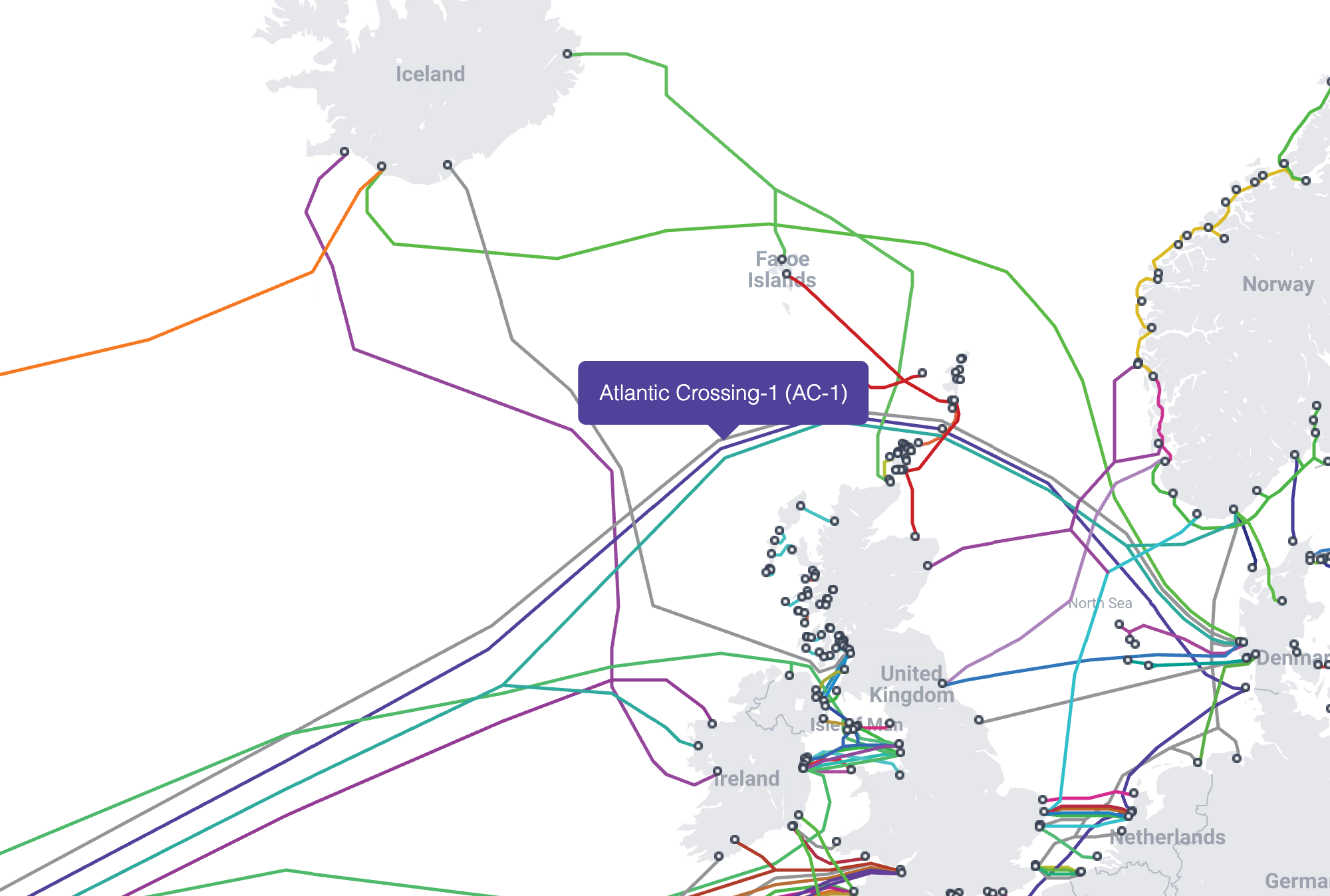
On October 21, 2026, The Telegraph released an investigative report suggesting Russian fishing vessels have been involved in a multiyear operation to map undersea cables. Using more than four years of vessel tracking data from Global Fishing Watch, the investigation found more than 500 incidents of Russian fishing vessels lingering near or following undersea cables in the Arctic and North Atlantic. The report identified the greatest concentration of activities around Scotland near the site of the Atlantic Crossing 1 cable.
Takeaways:
Russian maritime threats should be viewed as a key component of a larger gray zone campaign against NATO to tangibly raise the cost of continued support to Ukraine, develop leverage in negotiations over the future European security architecture, and position for advantage in a potential future war. Because retaliation for supporting Ukraine is one of several motives for these maritime activities, we should expect Russia to continue them, potentially at a similar intensity to the present, well after the war ends in order to secure concessions from Europe on broader strategic issues.
For Russia, irregular warfare at sea has definite advantages over similar aggression on land, making it an attractive option for testing escalation dynamics against NATO. Sabotage, intelligence collection activities, and even kinetic attacks are less attributable when conducted at sea. These operations can be performed in international waters by entities disguised through multiple layers of deniability, with some ships, such as shadow fleet vessels and fishing trawlers, owned by shell companies, flying flags of convenience, and frequently crewed by third-party nationals. It is also arguably more difficult for policymakers to effectively formulate responses to these incidents as they are often conducted far from shore and witnesses, and consequently generate less public interest than they would if they were conducted near population centers.
The spate of recent Russian attacks on ships in the Black Sea has focused on ships involved in trade with Ukraine. The Russian attacks seek to deter ships from assuming the risk of carrying any Ukrainian goods even when they are transported from non-Ukrainian ports on non-Ukrainian ships. This distant blockade of Ukrainian exports is part of a cumulative strategy to strangle the Ukrainian economy.
WESTERN PACIFIC FLASHPOINTS
Significant Activity in the Western Pacific and Taiwan
4. TAIWAN RESPONDING TO SIGNIFICANT INCURSIONS BY CHINESE SHIPS NEAR RESTRICTED WATERS
This week Taiwan’s Coast Guard Administration (CGA) announced it was responding to significant incursions by Chinese vessels near Taiwanese waters. On October 18, 2026, the CGA reported that it drove away 12 coast guard and dual-use research ships and 4 maritime militia fishing vessels operating in restricted waters near Hualien, south of Pingtung, southwest of Kaohsiung and around the outlying Dongsha (Pratas) Island. On October 20, 2026, an additional incursion near Dongsha (Pratas) Island was reported involving a China Coast Guard cutter traveling with its transponder turned off.
On October 23, 2026, the CGA told Reuters that it has begun observing China’s maritime militia practicing maneuvers with the China Coast Guard in the waters east of Taiwan for the first time.
Takeaways:
The 16 attempted incursions in four different areas on October 18 represent an unusually large number of incidents for a single day, but follow a general trend of increasingly persistent and large-scale probes by Chinese ships into restricted Taiwanese waters. This reflects increasing Chinese maritime capability and confidence in the China Coast Guard’s ability to conduct coordinated large-scale operations across China’s near seas.
The CGA has assessed that Chinese maritime militia maneuvers east of Taiwan are being conducted as part of an effort not only to raise pressure on Taiwan but also to face off against Japanese and Philippine ships. As noted in Weekly Significant Activity Report - July 11, 2026, China instituted routine patrols east of Taiwan in early summer in response to negotiations by Tokyo and Manila to alter maritime borders that overlap with Taiwan. The inclusion of maritime militia vessels in the China Coast Guard patrols represents a new escalation in the standoff and an expansion of China’s “maritime insurgency” outside of the South China Sea and into the Western Pacific.
This briefing was compiled by Dan White. Dan is an independent foreign policy analyst based in the New York Metro Area. Dan is a former member of The Wilson Center and The Kennan Institute. Dan holds masters degrees from the Johns Hopkins University School of Advanced International Studies (SAIS), the Naval Postgraduate School, and the University of Washington. Dan is a former officer in the United States Army and a veteran of the War in Afghanistan.
For more information, corrections, or comments, please contact djwhite155@gmail.com.