



This week’s analysis highlights some of the most significant geopolitical developments involving America’s adversaries—China, Russia, Iran, and North Korea—between August 8, 2026 and August 15, 2026.
Executive Summary:
US War with Iran - Significant Activity Related to the US-Iran War
Iranian Supreme Leader Mojtaba Khamenei appointed hardliners to seven top positions in the Iranian military and security apparatus on August 10, 2026, a move that institutionalizes an offensive shift in Iranian foreign policy and prepares the regime to crush future civil unrest.
The Eastern Front - Significant Activity Related to the War in Ukraine and Russian threats to NATO
Russia launched multiple waves of attacks on Ukrainian cities involving hundreds of drones and missiles amid depleted stocks of Ukrainian air defense interceptors. Attacks on August 9, 2026, singled out Odesa as part of a distant blockade of the port to stymie Ukrainian grain exports.
Western Pacific Flashpoints - Significant Activity in the Western Pacific and Taiwan
Frigates of the Chinese and Indonesian navies conducted a joint exercise in the waters east of Taiwan on August 12, 2026, a move that marked an escalation in an ongoing Chinese campaign to normalize its control over waters claimed by Taiwan, Japan, and the Philippines.
Russian President Vladimir Putin visited the disputed Kuril Islands in the western Pacific for the first time on August 13, 2026, as part of a tour of the Russian Far East, a move which triggered protests from Japan.
US WAR WITH IRAN
Significant Activity Related to the US-Iran War
1. IRAN SHUFFLES TOP LEADERS
On August 10, Iranian Supreme Leader Mojtaba Khamenei appointed new leaders to seven top positions in the military and national security apparatus. The new appointees include:
Mohsen Rezaei - Appointed Secretary of the Supreme National Security Council. Rezaei replaces Mohammad Baqer Zolqadr, who served in the position on an interim basis after Ali Larijani was killed on March 17, 2026, during Operation Epic Fury. Rezaei previously served as a senior advisor to Iran’s Supreme Leader.
Major General Ahmad Vahidi - Appointed Commander of the Islamic Revolutionary Guard Corps (IRGC). Vahidi replaces Lieutenant General Mohammad Pakpour, who was killed on February 28, 2026, during Operation Epic Fury. This is a promotion for Vahidi, who previously served as Deputy Commander for the IRGC.
Major General Mostafa Izadi - Appointed Deputy Commander of the IRGC. Izadi replaces Major General Ahmad Vahidi, who has been promoted to IRGC Commander. Izadi previously served as Commander of the Cyber and New Threats Headquarters of the Khatam al-Anbiya Central Headquarters.
Major General Ali Abdollahi - Appointed Chief of the General Staff of the Iranian Armed Forces. Abdollahi replaces Lieutenant General Abdolrahim Mousavi, who was killed on February 28, 2026, during Operation Epic Fury. Abdollahi previously served as Commander of the Khatam al-Anbiya Central Headquarters.
Brigadier General Kioumars Heydari - Appointed Deputy Chief of the General Staff of the Iranian Armed Forces. Heydari replaces Brigadier General Mohammad-Reza Gharaei Ashtiani.1 Heydari previously served as Deputy Commander of the Khatam al-Anbiya Central Headquarters.
Rear Admiral Ali Ozamaei - Appointed Commander of the IRGC Navy. Ozamaei replaces Rear Admiral Alireza Tangsiri, who was killed on March 26, 2026, during Operation Epic Fury. Ozamaei previously served as Deputy Commander of the IRGC Navy.
Hossein Taeb - Appointed Commander of the Basij paramilitary force. Taeb replaces Gholamreza Soleimani, who was killed on March 17, 2026, during Operation Epic Fury. Taeb previously served as Deputy IRGC Commander for Intelligence until 2022 and then as an adviser to the IRGC Commander.
Takeaways:
The new appointments suggest an institutionalization of Iran’s shift to a strategy of strategic defense and operational offense. The mixed doctrine seeks to use force against key regional infrastructure belonging to the US and Gulf states as well as to assert control over the Strait of Hormuz to reverse a trend of increasingly large-scale attacks by the US and Israel on Iranian territory and push US military bases farther from its territory.
The elevation of ruthless hardliners to top positions in the regime’s security apparatus also appears to be a measure to prepare for renewed civil unrest amid deteriorating economic conditions wrought by the war and a prolonged US naval blockade. Nearly all appointees have a proven willingness to kill Iranian civilians. Major General Ahmad Vahidi, for instance, is sanctioned by the US for his role in orchestrating systematic human rights abuses by Iranian security forces, including the crackdown on national protests in 2022 while serving as Minister of the Interior. Brigadier General Kioumars Heydari commanded the ground forces of the Iranian Army during the crackdown on anti-government protests in 2019. Major General Ali Abdollahi oversaw the massacre of political prisoners at Rasht prison in Gilan province in July 1988 as part of a national purge decreed by then Supreme Leader Ayatollah Ruhollah Khomeini. Hossein Taeb has played a key role in suppressing internal dissent in Iran for decades and has been sanctioned by the US since 2010 for his role in crushing national protests as commander of the Basij in 2009.
EASTERN FRONT
Significant Activity Related to the War in Ukraine and Russian threats to NATO
2. RUSSIA RAMPS UP ATTACKS ON UKRAINIAN CITIES
Russia Launched Major Drone and Missile Attack on Odesa
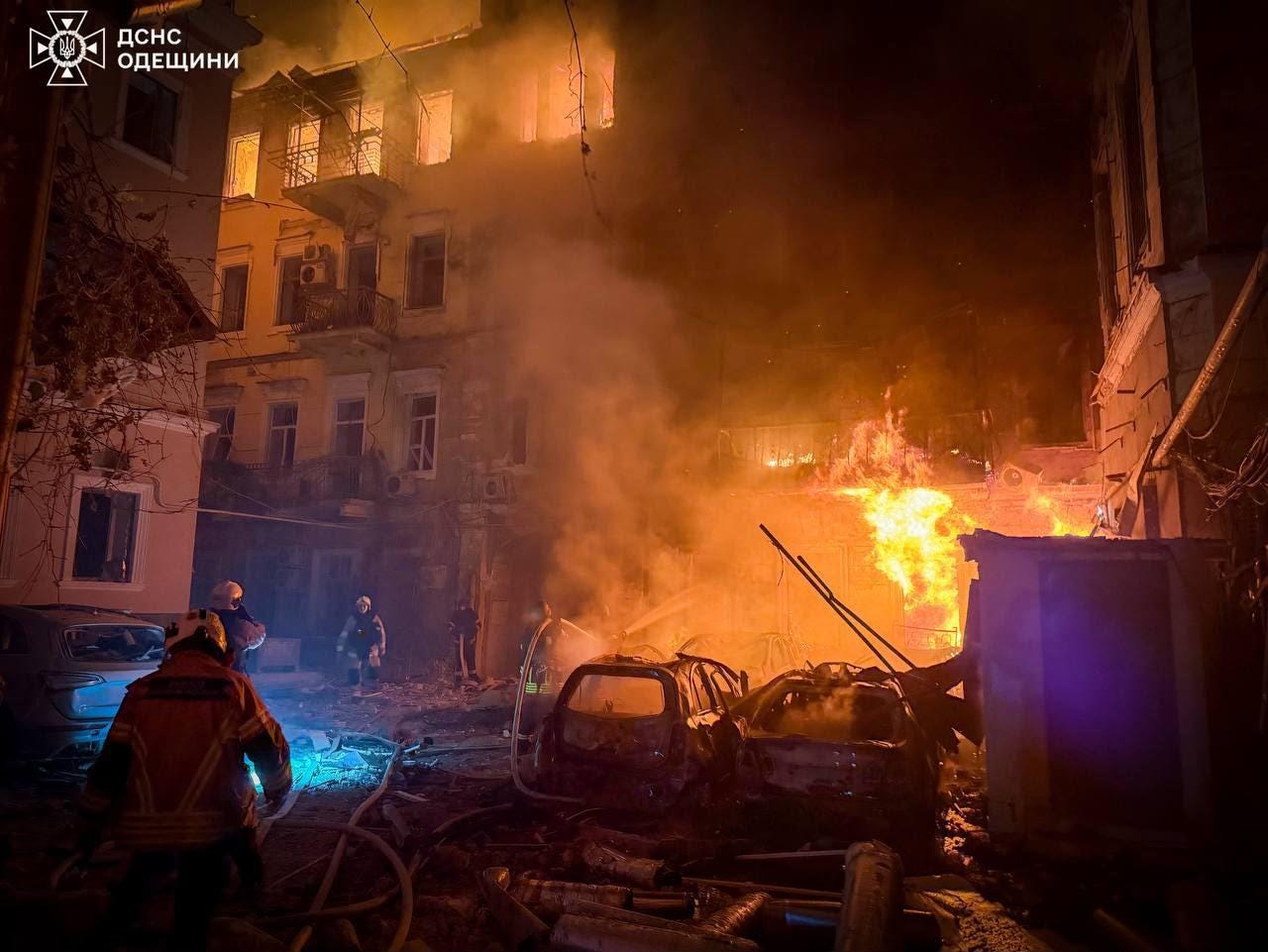
On August 9, 2026, Russia launched a massive bombardment of the Ukrainian port city of Odesa, involving 11 ballistic missiles and a combination of 100 drones and “Banderol” mini cruise missiles. The attack injured 14 people and caused damage to nine areas of the city including the port infrastructure.
Russia Conducted Massive Attack on Ukrainian Cities, including with North Korean Missiles
On August 11, 2026, Russia conducted a large-scale drone and missile attack on Ukrainian cities, including Kyiv and Zaporizhzhia, killing 11 and injuring at least 24. Seven of the eleven killed were workers of Zaporizhzhia’s Zaporizhstal metallurgical plant. Ukrainian President Volodymyr Zelensky claimed that the attacks on Zaporizhzhia involved North Korean ballistic missiles.
Takeaways:
On a strategic level, the attacks on Ukrainian cities are part of an intensifying Russian campaign to degrade Ukrainian infrastructure and inflict civilian casualties amid dwindling supplies of Ukrainian anti-ballistic missiles. This strategy is aimed at degrading civilian morale and increasing internal displacement to trigger a new wave of migration out of the country. The Kremlin may hope that major displacement, particularly in winter amid power and heating shortages, could lead to an internal political crisis in Ukraine and a surge in nationalist resentment among its neighbors absorbing refugees, which would potentially increase pressure for Kyiv to capitulate.
The use of North Korean missiles to complement its arsenal of domestically made munitions indicates that Russia is taking full advantage of the window of opportunity presented by Ukraine’s depleted stocks of air defense interceptors.
On an operational level, the attack on Odesa is part of a revamped Russian campaign to block Ukraine’s grain trade at harvest time. More than 90% of Ukraine’s grain is shipped through Odesa and adjacent Black Sea ports. Since June, Russia has sought to block that trade by attacking at least 50 Ukrainian cargo ships. Russia may be reviving a distant blockade of Odesa in the hopes of achieving greater effects this year amid global supply chain disruptions caused by the war between the US and Iran.
WESTERN PACIFIC FLASHPOINTS
Significant Activity in the Western Pacific and Taiwan
3. CHINA AND INDONESIA CONDUCT JOINT NAVAL EXERCISE EAST OF TAIWAN
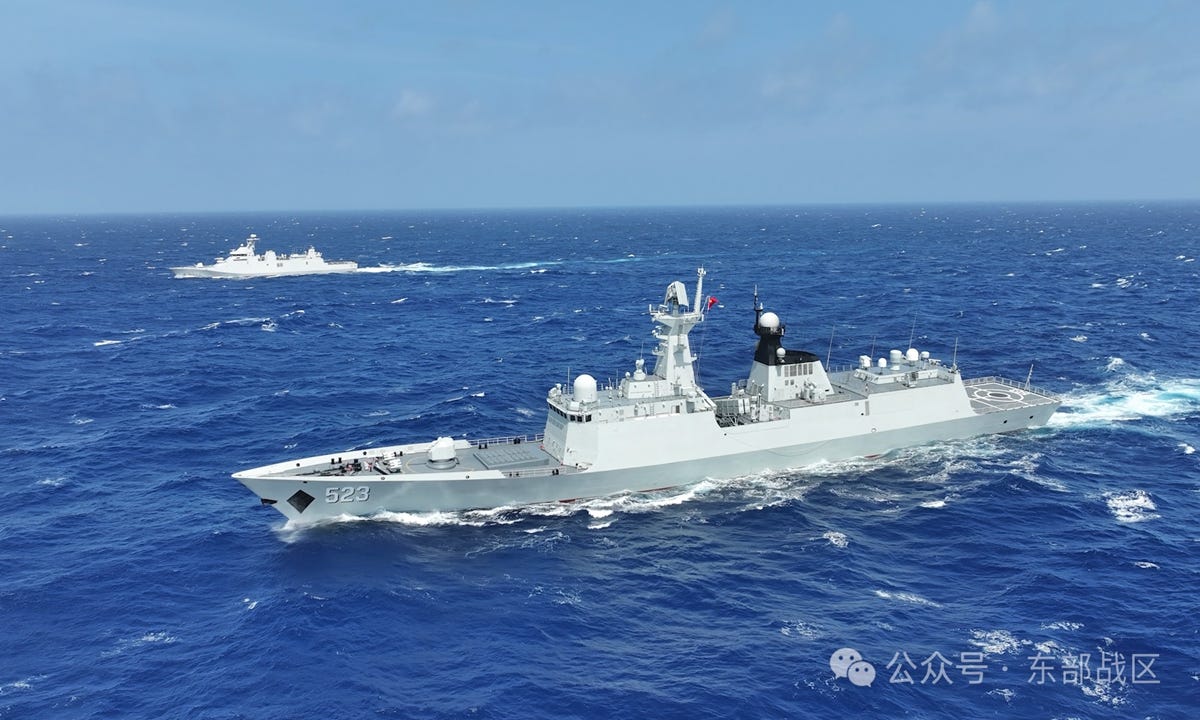
On August 11, 2026, China’s Ministry of National Defense announced an impending joint naval exercise between the People’s Liberation Army (PLA) Navy and the navy of Indonesia in the waters east of Taiwan. The exercise, held the following day on August 12, 2026, involved the PLA Navy’s Type 054A frigate Honghe and Indonesian Navy frigate KRI I Gusti Ngurah Rai. The frigates conducted a passing exercise testing joint communication and replenishment at sea.
Takeaways:
The exercise is less provocative than the Chinese military initially suggested it would be. Passing exercises (PASSEX) are common and brief training exercises initiated between ships passing one another at sea. In any case, hosting a joint military exercise in the waters east of Taiwan is an escalation of China’s increasingly assertive maritime claims in the western Pacific. In an interview with English-language Chinese state media outlet Global Times, Chinese military affairs analyst Zhang Junshe suggested the exercises sought to normalize control over the waters that feature overlapping claims by Taiwan, Japan, and the Philippines:
"China has sovereign rights and jurisdiction over the exclusive economic zone east of Taiwan Island. Inviting foreign naval vessels to conduct training in waters under China's own jurisdiction is normal and reasonable. The act also demonstrates that China has sovereign rights and jurisdiction over these waters. The relevant scope of China's sovereignty and maritime rights and interests includes the territorial waters east of Taiwan island, as well as the exclusive economic zone and continental shelf."
To this end, involving a major Southeast Asian nation in its maritime sovereignty patrols is a major step forward for China in its attempt to shift international consensus in favor of its vast territorial claims to not only the island of Taiwan but the vast waters of the western Pacific, including, but not limited to, the South China Sea.
The exercise comes amid an assessment by Taiwanese national security officials that Chinese leaders adopted a more assertive policy to reunify with Taiwan at their annual summer retreat at Beidaihe. According to the Taipei Times, the policy adopted has four key pillars to increase internal and external pressure on the Taiwanese government and establish de facto control over the island.
First, China opposes Taiwan seeking independence by force, the official said.
The CCP believes that Taiwan increasing its military investment or expanding deployment of uncrewed aerial vehicles would radically disrupt China’s favorable position in the Taiwan Strait, the official said.
Second, China would strengthen “de facto governance” over Taiwan, they said.
The CCP would continue to suppress Taiwan’s international space and sovereignty through legal and cognitive warfare, the official said.
Third, China would mobilize resources to cover all sectors in Taiwan to jointly oppose and frustrate Taiwanese independence forces and form a force supporting cross-strait unification, they said.
Fourth, China would give its all-out support to “patriotic forces” in Taiwan during the year-end elections, the official said.
4. PUTIN MAKES FIRST VISIT TO DISPUTED KURIL ISLANDS
On August 13, Russian President Vladimir Putin visited Iturup, the largest island of the Kuril chain, during a multi-day tour of the Russian Far East. The trip was Putin’s first visit to the Kuril Islands, historic Japanese territories located off the northeastern coast of Hokkaido that were seized by the Soviet Union at the end of the Second World War.
Japan summoned Russian Ambassador to Japan Nikolay Nozdrev to protest the visit and is reportedly considering an array of further retaliatory measures.
Takeaways:
Putin’s visit coincides with the publication of a new defense white paper by Japan’s Ministry of Defense on August 4, 2026. The paper characterized Russia as a growing threat to Japanese national security due to its increased security cooperation with both China and North Korea. The paper also asserted that Russia has grown increasingly provocative in its military activities near Japanese borders. In Fiscal Year 2025, the Japan Air Self-Defense Force reported scrambling fighters 214 times to intercept Russian aircraft in its air defense identification zone.
The unprecedented move by Putin is likely designed to more closely align Russia with China’s ongoing pressure campaign against the government of Japanese Prime Minister Sanae Takaichi. Putin may be inclined to sacrifice relations with Japan in the hopes of securing key economic deals with China, the most significant of which is the long-delayed Power of Siberia 2 pipeline. Beijing has yet to greenlight the construction of the natural gas pipeline despite over a decade of negotiations and a purportedly “binding” agreement reached in 2025. Russia needs the pipeline to make up for some of the gas volume lost from European sanctions, but China continues to hold out for greater discounts in pricing and flexibility in purchases.
This briefing was compiled by Dan White. Dan is an independent foreign policy analyst based in the New York Metro Area. Dan is a former member of The Wilson Center and The Kennan Institute. Dan holds masters degrees from the Johns Hopkins University School of Advanced International Studies (SAIS), the Naval Postgraduate School, and the University of Washington. Dan is a former officer in the United States Army and a veteran of the War in Afghanistan.
For more information, corrections, or comments, please contact djwhite155@gmail.com.
A new position for Ashtiani has not yet been announced.