



This week’s analysis highlights some of the most significant geopolitical developments involving America’s adversaries—China, Russia, Iran, and North Korea—between January 10, 2026 - January 17, 2026.
Summary:
A new wave of Russian drone and missile strikes on Ukrainian energy infrastructure caused widespread outages across Ukraine and triggered a national state of emergency.
Russia faced an unexpected political crisis in Chechnya when Adam Kadyrov, the son and heir apparent to ailing Chechen leader Ramzan Kadyrov, was critically injured in a car accident.
Russia deployed the Geran-5, a next generation long-range strike drone, for the first time in Ukraine.
A Chinese reconnaissance drone violated Taiwanese airspace near Pratas Island.
The death toll from Iranian protests surged past three thousand this week as regime security forces unleashed brutal violence on demonstrators.
1. RUSSIA INFLICTS SEVERE DAMAGE ON UKRAINE’S ENERGY INFRASTRUCTURE
This week Russia intensified its attacks on Ukraine’s energy infrastructure, launching a mass attack on January 13 involving 293 drones, 18 ballistic missiles, and seven cruise missiles targeting eight regions resulting in mass power outages across the country. Power outages and emergency rationing of electricity have continued in the days after the strikes and a nationwide state of emergency was declared on January 16, amid a cold front which caused temperatures to drop to as low as -20 degrees celsius (-4 degrees Fahrenheit.)
Takeaways:
Russia has conducted winter campaigns targeting Ukraine's energy infrastructure each year of the war, aiming to demoralize Ukrainian civilians and trigger a humanitarian crisis that generates new waves of migration and political pressure on Ukrainian leaders. This year's campaign has proven more effective than previous attempts, thanks to improvements in Russian drone and missile technology as well as adaptations in tactics to evade Ukrainian air defenses.
It is still unlikely that Russia will succeed in breaking the will of the Ukrainian population through these strikes. Strategic bombing has a poor track record of initiating war-ending political crises, absent a successful ground offensive—which Russia does not yet have.
Russia will have a difficult time denying Ukraine access to the electricity it needs to continue its war effort. The majority of Ukraine’s power comes from nuclear power plants, rather than the thermal power plants Russia has targeted. Russia has repeatedly threatened Ukraine's nuclear power plants, particularly the Zaporizhzhia nuclear power plant. Some Ukrainian officials now fear that Russia could be attempting to cut nuclear plants off from the electrical grid, denying their reactors backup power systems that could precipitate a nuclear meltdown. This outcome still seems unlikely as such attacks would likely trigger an international response due to the collective risk to European security and would carry additional risk of Ukrainian reprisals on Russian nuclear plants.
Ukraine also receives significant and growing, electricity imports from the European Union, making up 2.45 GW of its total 18 GW needs. As a result, the current strikes are unlikely to significantly impact Ukraine’s essential industries.
2. RUSSIA FACES SUDDEN POLITICAL CRISIS IN CHECHNYA
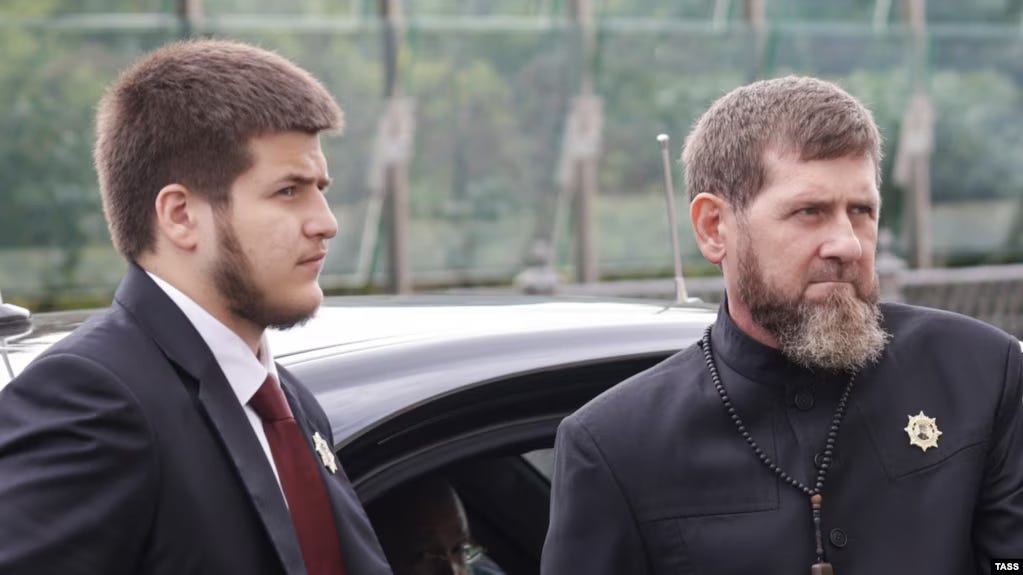
On January 17, Russia faced an unexpected political crisis in Chechnya as Adam Kadyrov, the 18-year old heir apparent to Ramzan Kadyrov, the ailing leader of the semi-autonomous region, was severely injured in a car accident in Grozny. According to Russian investigative journalist outlet iStories, the younger Kadyrov was allegedly flown to Moscow hospital in critical condition on a specialized medical aircraft employed by Russia’s Ministry of Emergency Situations.
Takeaways:
Adam Kadyrov’s condition is still unknown at the time of writing, however the apparent medical evacuation to Moscow by a special purpose government aircraft suggests he may be at risk of permanent injury or death.
Ramzan Kadyrov has been suffering from unknown chronic illnesses for years, and reports of his declining health have intensified in recent weeks. He was allegedly hospitalized on the brink of death in November 2025. The event was serious enough for the Chechen leader to issue unusual public remarks in December suggesting he has occasional nervous breakdowns due to the stress of the war to redirect suspicions about his physical health. Adam, who only turned 18 in 2025, has received major military promotions and awards over the past few years amid rumors of his father’s declining health, suggesting he has been being groomed to lead the country.
The death or incapacitation of either or both Kadyrovs could precipitate a succession crisis in Chechnya, a region that retains a significant separatist movement and has posed serious threats to Russian internal stability since the Soviet Union's collapse. The Kadyrov family has played an outsized role in keeping the region loyal and stable for the Kremlin through close personal ties with Vladimir Putin and brutal suppression of dissent. The sudden end of Kadyrov rule would likely trigger renewed factional conflict over control of the region and potentially instigate a third Chechen War.
3. RUSSIA BEGINS EMPLOYING NEXT GENERATION LONG-RANGE STRIKE DRONE
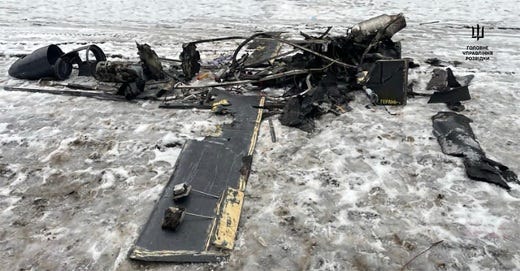
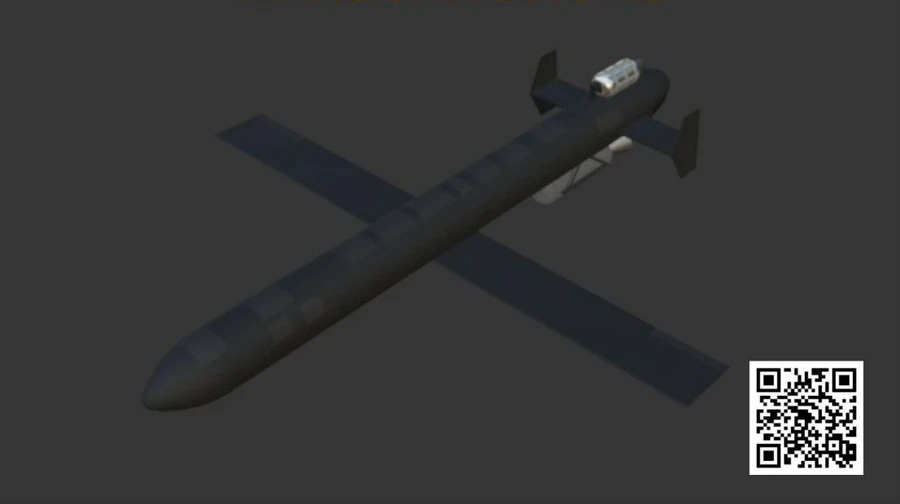
Ukraine's Main Intelligence Directorate (HUR) announced that Russia launched an attack using a new long-range strike drone, the Geran-5, on January 11.
According to the HUR the Geran-5 has the following characteristics:
“The drone has a length of about 6 meters and a wingspan of up to 5.5 meters. Unlike previous modifications of the “Geran” line, the device is made in a normal aerodynamic scheme. At the same time, most of the key nodes and components are unified with other models of this series.
“In particular, the use of a 12-channel satellite navigation system “Cometa”, a tracker based on the Raspberry microcomputer and 3G/4G modems, as well as a jet engine Telefly, similar to the one used on the UAV “Geran-3”, but with greater thrust, has been installed.
“The mass of the combat unit is about 90 kg, and the declared range of destruction is about 1,000 km.”
Takeaways:
HUR has suggested the drone strongly resembles the Iranian Karra drone, suggesting that Russia continues to rely on Iranian base models for its drone development. Bloomberg also highlighted the continuing role of Iranian arms and technical expertise in Russia's war effort this week in January 12 report revealing that Iran shipped $2.7 billion worth of drones and missiles to Russia in 2025.
The Geran-5 may stand out from previous Geran series drones by being able to be air-launched from Russian fighter bombers. This capability would potentially enable the drones to fly faster and more unpredictable flight paths and make them more difficult to intercept.
4. CHINESE DRONE VIOLATES TAIWANESE AIRSPACE
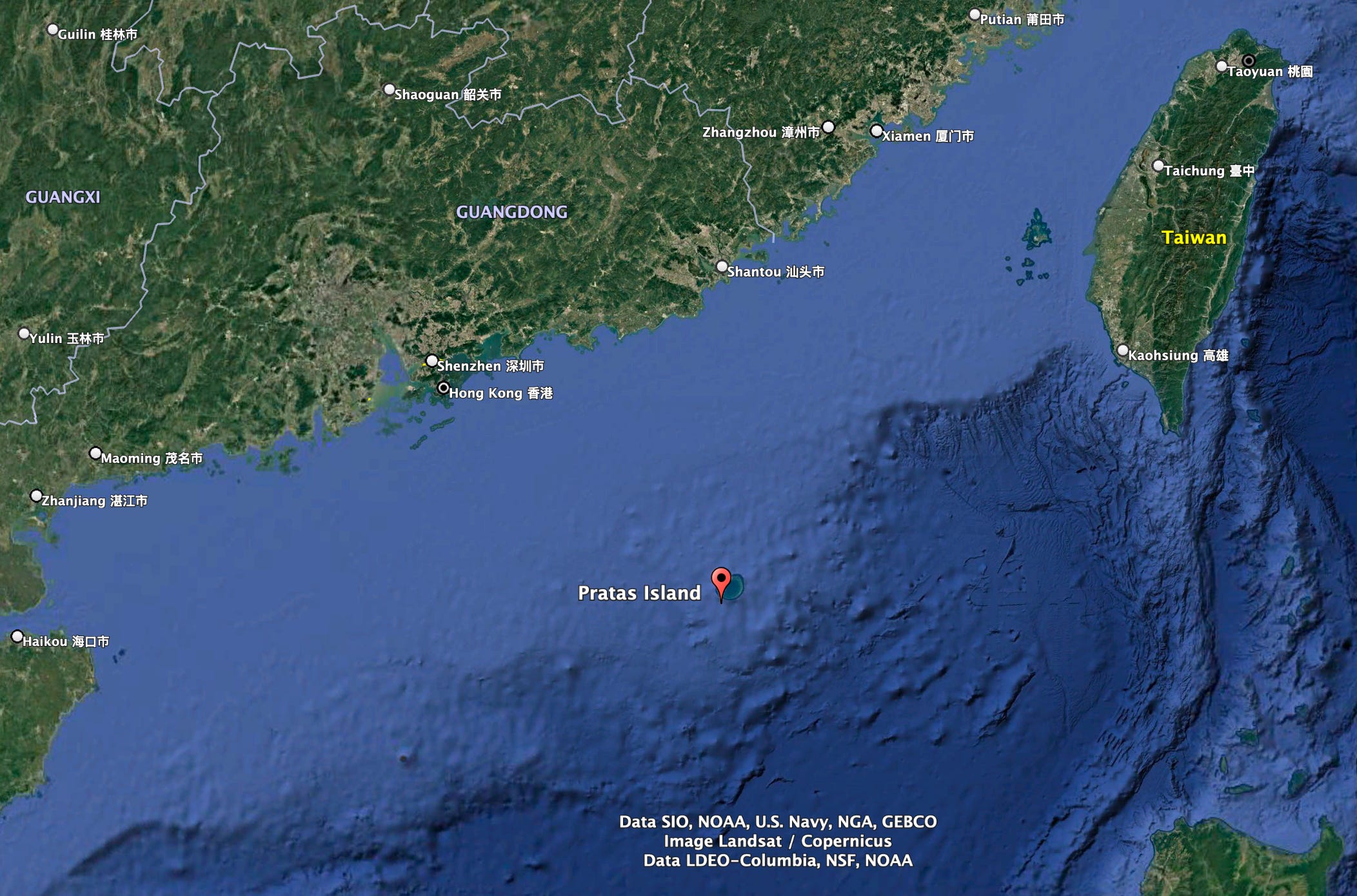
On January 17, Taiwan’s Ministry of National Defense reported that a large Chinese reconnaissance drone crossed into Taiwanese airspace in the vicinity of the Pratas Islands (also known as the Dongsha Islands). The drone remained in the airspace of the outlying islands for less than five minutes.
Takeaways:
The new drone incursion, which occurred at the edge of the island’s 12 nautical mile territorial airspace appears to be testing the response time and capability of Taiwanese troops on Pratas. The probe may have revealed critical gaps in security on the island. According to the Taipei Times, the military garrison on Pratas has only short-range stinger missiles for air defense, which would have been unable to intercept the drone at that distance.
5. IRAN UNLEASHING MAXIMUM REPRESSION TO QUELL PROTESTS
Iranian Security Forces Kill Thousands of Protesters in Week of Mass Bloodshed
Saturday January 17 marked the 21st day of mass anti-government protests in Iran. According to Human Rights Activists in Iran (HRAI), the number of individuals killed in the demonstrations has surged over the past week climbing to at least 3,308 deaths, with another 4,382 deaths being investigated. All but 166 of these deaths come from protesters and other civilians. The government has arrested a total of 24,266 protesters.
Protesters set government vehicles on fire in Saadat Abad Pine Square in Tehran on January 17. Source: Vahid Online (@VahidOnline) on Telegram
Human Rights Watch has found strong evidence that mass killings perpetrated by Iranian security forces have occurred in the provinces of Tehran, Alborz, Kermanshah, Razavi Khorasan. Growing evidence suggests massacres have also taken place in the provinces of Gilan, Mazandaran, Kohgiluyeh and Boyer-Ahmad, and Markazi.
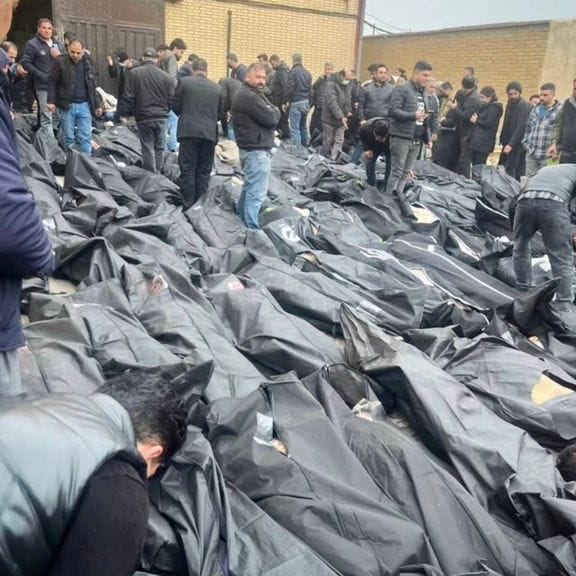
Widespread internet outages continued across Iran this week. Internet monitoring service Netblocks detected a brief uptick in connectivity on January 16, but near-total outages resumed less than 24 hours later. The internet has now been largely blocked nationwide for over 200 hours, a record for the country.
Iranian Authorities Coercing Families of Victims to Agree to Pro-Government Narratives
Iran International reported this week that the Iranian government is coercing families of protesters killed by security forces to either remain silent or endorse the regime's narrative of the protests as a condition for receiving their loved ones' bodies. In some cases, authorities have demanded that families posthumously register their deceased relatives as members of the pro-regime Basij militia.
Takeaways:
Though demonstrations have continued, the unprecedented repression appears to have suppressed the growth of the protest movement for now. However, the wanton violence may ultimately backfire by making more of Iranian society open to supporting armed foreign intervention.
Executions of anti-government protesters are likely continuing in Iran despite President Trump’s claims to the contrary. The killings appear to be occurring unannounced in networks of secret detention sites and on-the-spot executions of wounded protesters rather than in official prisons.
Registering dead protesters as members of Iranian security forces appears to be a tactic designed to inflate government casualty figures and support claims that the protests are violent riots rather than legitimate demonstrations. Supreme Leader Ayatollah Ali Khamenei reinforced this narrative in official remarks on January 17, characterizing protesters as trained agents of the US and Israel who “caused massive damages and killed several thousands.”
The number of confirmed deaths is likely to surge in coming days as internet outages are eased.
thanks