



This week’s analysis highlights some of the most significant geopolitical developments involving America’s adversaries—China, Russia, Iran, and North Korea—between July 11, 2026 and July 18, 2026.
Summary:
Iran and the US exchanged blows in a week of escalating conflict, effectively ending the April ceasefire. Iran told the Houthis to prepare to close the Red Sea, its military headquarters declared control of the Strait of Hormuz an "invincible red line," Tehran ended its commitments under the Islamabad Memorandum, and Supreme Leader Mojtaba Khamenei released a new written statement threatening retaliation.
New European sanctions followed revelations that hackers of the Russian FSB attempted to bring down part of the Polish power grid in December 2025.
Russia is scaling up production of its S8000 Banderol mini-cruise missile, aiming for 120 a month, to bridge the capability gap between drones and larger missiles.
Ukraine’s “Middle Strike” campaign against Crimea tallied 172 damaged or destroyed Russian shadow fleet vessels in the past two weeks as part of Operation Molochka.
China strongly protested global support for the 2016 Permanent Court of Arbitration ruling against its South China Sea claims on the ruling's 10th anniversary.
China launched WAICO, a new 29-member global AI alliance, on the sidelines of the World AI Conference in Shanghai.
North Korea has built at least 21 new drive-through arms depots for rockets and missiles near the South Korean border since 2023.
1. IRAN WAR UPDATE
Conflict Between US and Iran Intensifies with Trump Notifying Congress of Renewed War
This week the US and Iran engaged in the most intense bout of fighting since the announcement of the ceasefire in April. The fighting, continued from last week, came as the Trump administration sent a formal notification informing Congress of renewed war with Iran, and reimposed a naval blockade of Iranian ports on July 13.
The US conducted waves of bombing every day this week, which, while focused primarily on southern Iran, were far more widespread than previous retaliatory strike operations. Iran responded with drone and missile attacks on Qatar, Jordan, the United Arab Emirates, Bahrain, Oman, Kuwait, and for the first time Syria.
Both sides notably targeted critical infrastructure in their attacks. US airstrikes attacked key bridges, railways, ports and airports in southern Iran. Iranian attacks struck power plants and a desalination facility in Kuwait.
Overall battle damage is still being assessed, but Iranian strikes have resulted in US casualties including at least two US service members killed in Jordan.
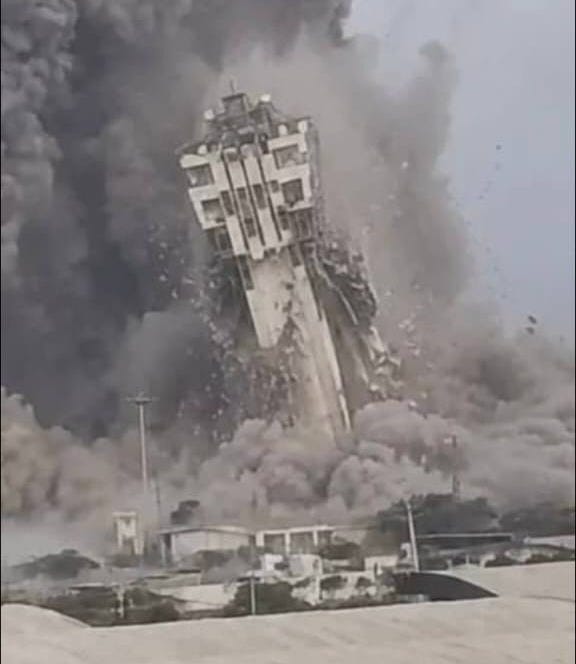
Iran tells Houthis to Prepare to Close Red Sea
Reuters reported on July 16 that Iran had instructed the Houthis to begin military operations to close the Bab al-Mandeb Strait to maritime shipping if the US were to follow through on threats to bomb critical infrastructure.
Iran Declares Control of the Strait of Hormuz “An Invincible Red Line”
On July 16, Brigadier General Ebrahim Zolfaghari, spokesman for Iran's Khatam al-Anbiya Central Headquarters called permanent control of the Strait of Hormuz an “invincible red line” for Iran, and warned of crushing reciprocal response on regional infrastructure if the US follows through on threats to Iran’s bridges and power plants.
Iran Ends its Commitments to the Islamabad Memorandum
On July 18, Iranian Deputy Foreign Minister Kazem Gharibabadi announced that the country had suspended its obligations under the Islamabad Memorandum in response to continued US attacks.
New Khamenei Statement Calls US "Untrustworthy," Warns of "Unforgettable" Retaliation
On July 18, Iranian Supreme Leader Mojtaba Khamenei released a new written statement denouncing the US as fundamentally untrustworthy and threatening “unforgettable” military retaliation to come.
The repeated breach of agreements by the Great Satan vis-a-vis the accord has once again proven to all that the signature of the President of America is now utterly worthless and invalid, and that bullying, hegemonism and savagery are inseparable components of the American creed and doctrine.
[…]
Now that the American enemy is seeking to foment war and suffer heavier costs and further humiliation, it should know that the dear nation of Iran and the Resistance Front hold unforgettable lessons for it.
Takeaways:
The intense fighting has caused maritime traffic through the Strait of Hormuz to collapse. A low of 8 ships per day passed through the Strait on July 16, down from around 30 per day a week earlier.
The steadily growing intensity of fighting, now moving toward attacks on critical infrastructure, paired with more aggressive posturing by US and Iranian leaders, suggests that the ceasefire is effectively over. The coming week could see some of the most intense and ruthless attacks by both sides since the start of the war.
-
The US has begun a massive increase in its tanker aircraft in the Middle East suggesting a coming uptick in overall bombing sorties, and possible re-entry of Israeli aircraft into the war. Numerous Iranian officials have interpreted the attacks on infrastructure and growing force presence to be a prelude to a potential ground campaign against Iranian islands such as Qeshm and Kharg near the Strait of Hormuz.
-
Recent activities suggest Iran may seek to escalate the conflict over the next week with attacks on the critical infrastructure of regional Arab states—including on desalination systems, oil fields, and airports—and compel the Houthis to attempt to close the Red Sea by attacking shipping through the Bab al-Mandeb Strait.
2. RUSSIAN INTELLIGENCE LAUNCHED UNSUCCESSFUL CYBER ATTACK ON POLAND’S POWER GRID
On July 13, the European Union and UK announced coordinated sanctions against Russia over attempted cyber attacks on Poland’s energy grid. The attacks, launched in December 2025 by the Russian Federal Security Service (FSB), using DynoWiper malware, were ultimately unsuccessful. If they had worked, the attacks could have left half a million people without power during the heart of winter.
Takeaways:
The attempted cyber attacks are just the latest known operations in a years-long campaign of sabotage and disruption directed by the Kremlin against European NATO member states. Poland has been a top target of the Russian campaign with Colonel Rafał Syrysko, the head of Poland’s Internal Security Agency (ABW), warning in May that "Russia keeps pushing the limits," toward more lethal and destructive attacks against the country.
3. RUSSIA AIMS TO PRODUCE 120 BANDEROL CRUISE MISSILES PER MONTH
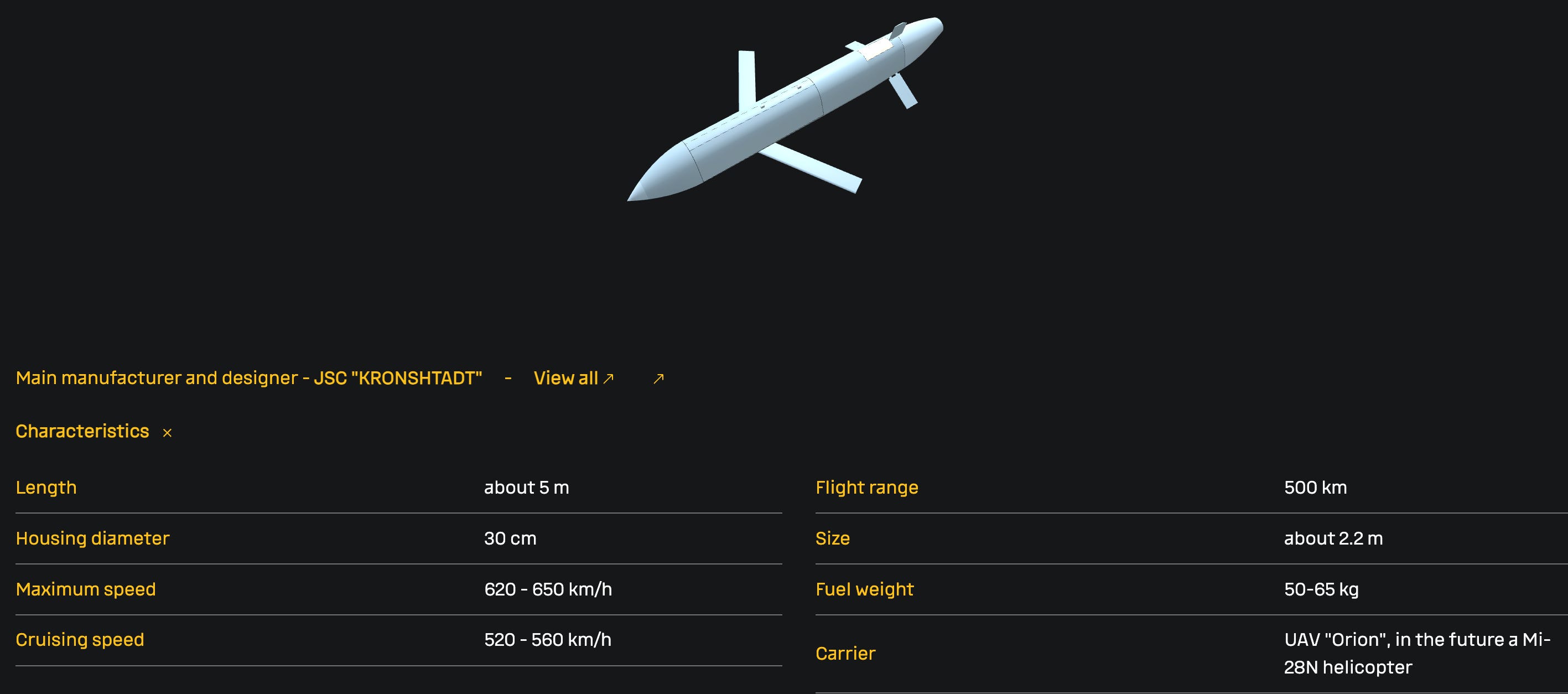
On July 14, Serhiy “Flash” Beskrestnov, an advisor to Ukraine’s Defense Minister, announced that Russia is aiming to produce 120 S8000 “Banderol” mini-cruise missiles per month.
According to Ukraine’s Main Directorate of Intelligence (GUR), Banderol missiles can carry a maximum payload of 150 kg of explosive up to 500 km at a cruising speed up to 560 km/hour. Banderol missiles are primarily air-launched from “Orion” drones produced by its manufacturer, the Kronstadt Group, but can also be launched from Russian Mi-28 helicopters.
Takeaways:
The Banderol missile is much smaller than a traditional cruise missile and has a smaller warhead than even a Shahed drone. As a result, the weapon can’t penetrate hardened buildings or command bunkers, and is most effective against exposed surface-level targets. Nevertheless, Banderols are appealing to the Russian military as a capability that bridges advantages between larger and more expensive missiles, less survivable drones, and less accurate conventional glide bombs.
4. RUSSIAN SHADOW FLEET SUFFERS MASSIVE BLOWS FROM UKRAINIAN DRONE ATTACKS
This week Ukrainian drones struck and either disabled or destroyed dozens of vessels associated with Russia’s shadow fleet in the waters of the Black Sea and Sea of Azov. In less than two weeks, drones of Ukraine’s Unmanned Systems Forces have hit as many as 172 Russian ships including shadow fleet tankers, cargo ships, ferries and support vessels servicing Crimea as part of Operation “Molochka”.
According to the commander of Ukraine’s Unmanned Systems Forces Robert “Magyar” Brovdi, between July 6-18, Ukrainian drones struck 129 vessels in the Sea of Azov and 43 vessels in the Black Sea.1
Overview of Operation Molochka progress on July 17. Source: Robert “Magyar” Brovdi on Telegram
Takeaways:
“Molochka” is a Ukrainian acronym that roughly translates to “Moscow will fall because of Crimea.” The operation, launched in July, is the latest phase of Ukraine’s “Middle Strike” campaign begun in early April to attack road, rail, and maritime logistics networks supplying Crimea.2 The campaign has effectively isolated the peninsula from the mainland causing prolonged shortages of fuel, a breakdown of critical infrastructure—including the power grid—and the flight of residents and vacationers back across the Kerch Bridge to the Russian mainland.
The Middle Strike campaign has transformed Crimea’s once strategic geography commanding the Black Sea and buttressing Russian military logistics networks in southern Ukraine into an anchor dragging down the Russian war effort. In a further sign of shifting momentum, the crippling strikes on Russian infrastructure and logistics have allegedly begun forcing Russia to divert some of its best drone units from offensive operations against Ukraine into defensive operations to protect shipping near the peninsula.
5. CHINA PROTESTS ANNIVERSARY OF RULING REJECTING ITS MARITIME CLAIMS
On July 13, China issued a statement reiterating its vast territorial claims to the South China Sea, rejecting the 2016 ruling of the UN Permanent Court of Arbitration on its 10th anniversary.
The “arbitration” violates fundamental principles of international law, including state consent and pacta sunt servanda, contravenes UNCLOS itself, and, still more importantly, runs counter to the basic facts of the South China Sea. The so-called “award” is nothing but a worthless piece of paper that is illegal, null and void, and has no binding force. China does not accept or recognize the “award,” and opposes and does not accept any claim or action based on it. China’s territorial sovereignty and maritime rights and interests in the South China Sea shall not be affected by the “award” under any circumstances.
China’s Ministry of Foreign Affairs also issued a stern rebuke directed at European nations affirming their support for the 2016 UN Permanent Court of Arbitration ruling.
Certain European countries need to be reminded that blatantly applying double standards on issues concerning international law will only further erode their own credibility on the international stage, and does not help deepen mutual trust between China and Europe. Europe is not a party in the South China Sea and is in no position to pass judgment on China’s legitimate territorial sovereignty and maritime rights and interests in the South China Sea. We urge the EU side to act prudently, stop endorsing the illegal “award,” and not to affect the China-EU ties and cooperation.
Takeaways:
The 2016 Permanent Court of Arbitration ruling has been a major thorn in China’s side for the past ten years, complicating its attempts to legitimize its vast territorial claims to the entirety of the South China Sea. The ruling has effectively undermined the broader narrative Beijing has attempted to cultivate of its peaceful rise untainted by imperial ambition. As a result, China continues to direct intense fury at the Philippines and its supporters in an attempt to wear down continued opposition.
The recent outburst highlights escalating aggressiveness by China in asserting its dominance in the region. Clashes with the Philippines in territory China continues to illegally claim are becoming increasingly violent, most notably near Scarborough Shoal. China appears to have also signaled a willingness to escalate its territorial claims in response to continued resistance. An academic conference in late June put forward historical claims to the Philippines' Batanes islands, likely serving as a trial balloon for future government officials to latch on to.
Ultimately, China continues to escalate because it has good reason to believe it will succeed given enough pressure. Beijing has ended the "one country, two systems" policy in Hong Kong and effectively crushed the Uyghur Muslim minority in Xinjiang despite international opposition. It continues to peel off Taiwan's allies, while strengthening its hold on its near seas with a growing navy. And most significantly, it has recently forced both the US and the European Union to retreat from protectionist policies through its own coercive economic countermeasures.
6. CHINA LAUNCHES WAICO, A NEW GLOBAL AI ALLIANCE HEADQUARTERED IN BEIJING
On July 17, Xi Jinping announced the launch of a new global cooperation body for artificial intelligence, at his keynote address to the World AI Conference in Shanghai. The new organization, to be headquartered in China, named the World AI Cooperation Organization (WAICO), attracted 29 founding members including Russia, Brazil, Cuba, Venezuela, Belarus, Serbia, Pakistan, Indonesia, Kazakhstan, and South Africa.
Takeaways:
WAICO, which was first proposed at last year’s World AI Conference, is China’s latest effort to establish itself as a global leader to countries underserved by the Western-led international order. The organization will likely serve as a setter of norms and technical standards for the use of AI in developing countries of the so-called Global South. China's strategy carries significant appeal as global trust in the US declines and China comes to be seen as a model for stable economic development. This appeal is bolstered by impressive new open-source AI models, including the newly released Kimi K3 by Moonshot AI, which ranks among the top of all global frontier models.
7. NORTH KOREA HAS BUILT ALMOST TWO DOZEN NEW ROCKET AND MISSILE BASES NEAR THE DMZ
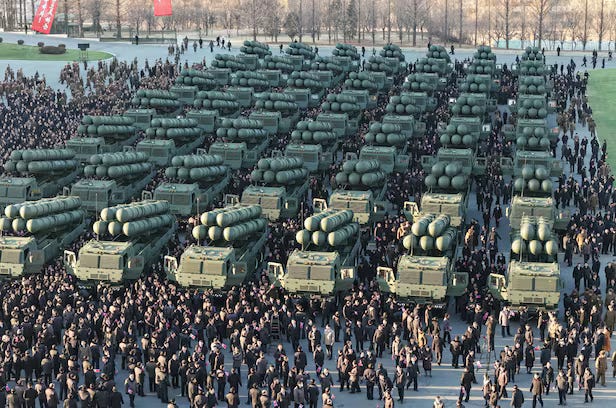
A visual investigation released this week by Radio Free Asia has identified a series of at least 21 uniform, drive-through warehouses constructed near the demilitarized zone in North Korea between 2023 and 2025. The facilities resemble structures at the Kal-gol missile operating base, suggesting they are ammunition depots for North Korean rocket and missile forces.
Takeaways:
As noted in the article (and previous Weekly Significant Activity Reports), the construction corresponds with North Korea’s production of dozens of new multiple launch rocket systems. These include trucks that can launch 600mm and 240mm rockets and serve as platforms for larger missiles. The proximity of the new drive-through facilities to the border means they could be used to store and arm launchers for attacks on Seoul and other major South Korean cities in the event of war.
This briefing was compiled by Dan White. Dan is an independent foreign policy analyst based in the New York Metro Area. Dan is a former member of The Wilson Center and The Kennan Institute. Dan holds masters degrees from the Johns Hopkins University School of Advanced International Studies (SAIS), the Naval Postgraduate School, and the University of Washington. Dan is a former officer in the United States Army and a veteran of the War in Afghanistan.
For more information, corrections, or comments, please contact dan@opforjournal.com.
An additional 13 vessels were struck on July 18, including 12 in the Black Sea and 1 in the Sea of Azov.
“Middle strikes” include drone and missile attacks between line of contact and the deep Russian rear, roughly 25-200 km from the front.