


The US and Israel have engaged in seven days of high-intensity combat operations against Iran. The joint military campaign has steadily intensified over the past week and has severely battered but not yet defeated the Iranian regime. While the war’s outcome remains uncertain, several trends in Iran’s response have now become visible that may be used to interpret and forecast its overall strategy. This Situation Report examines those trends to assess Iran's operational plans, evaluate their effectiveness, and identify pathways by which the Iranian regime might still survive and claim a form of victory.
This Situation Report is broken into two parts:
Interpretations of the components and effectiveness of Iranian strategy
On Iran’s long-range retaliatory strike campaign
On Iran’s use of proxy forces
On Iran’s blockade of the Strait of Hormuz
Prospects for Iranian Victory
Through triggering a global economic crisis
Through a prolonged campaign of destabilizing low-intensity attacks
Components and Effectiveness of Iranian Strategy
Iran’s military response has centered on three elements: long-range drone and missile strikes, the activation of proxy forces across the Middle East and beyond, and a maritime blockade of the Strait of Hormuz. The strategic rationale behind these operations is to escalate the war horizontally in order to create a regional conflagration that roils the global economy, frightens US allies, and triggers a domestic political crisis in the United States. The end goal is to force the US to end the war short of its objectives and, in doing so, preserve the Iranian regime.
Iranian Long-Range Strikes Have Created Chaos but Are Losing Their Effectiveness and Have Generated Unexpected Backlash
As anticipated, Iran has launched drone and ballistic missile strikes against US military bases across the Middle East as well as against Israeli territory. But Iran has also gone further, striking the territory and in some cases civilian populations of 12 countries throughout the region, including several close US Arab allies such as the UAE, Saudi Arabia, Bahrain, Qatar, Jordan, and Iraq. It has also targeted US partners farther removed from the conflict including Turkey, Azerbaijan, Cyprus, and Oman. The widespread strikes appear aimed to endanger the core national interests of Iran’s neighbors and create regional chaos that pressures the US and Israel into ending the war.
Iranian drone attack on Dubai International Airport on March 7. Source: Noel Reports (@noel_reports) on Telegram
This long-range strike campaign has been far more extensive and devastating than previous Iranian retaliatory strikes against Israel and US military bases in 2020, 2024, and 2025. According to the US Chairman of the Joint Chiefs of Staff General Dan Caine, Iran launched at least 500 missiles and 2,000 drones at its neighbors between February 28 and March 3 alone, with several hundred additional drones and missiles fired since then. The majority of strikes have targeted the UAE, which as of March 5, reported detecting 196 ballistic missiles and 1,072 drones, of which 181 and 1,001 were intercepted respectively.
Iran has seen some significant operational successes in these attacks. Iran has struck multiple US military bases in the region, damaging at least five sophisticated US air defense radars in the UAE, Jordan, and Saudi Arabia, and killing six US service members in an attack on an army operations center in Kuwait. Iran has landed additional blows against multiple US diplomatic and intelligence sites in Iraq, the US Consulate in Dubai, UAE, and the US Embassy in Riyadh, Saudi Arabia. Iran has also struck oil and gas infrastructure in Bahrain, Kuwait, Saudi Arabia, Qatar, and the UAE.
A fire at Saudi Arabia’s Ras Tanura oil refinery resulting from an Iranian drone strike Source: Mamlekate (@mamlekate) on Telegram
Three incidents of US F-15E fighters brought down by friendly fire in Kuwait on March 3 are evidence that fear of Iranian long-range strikes haunts US allies and has shaken their decision-making. However, in many ways Iran’s long-range strike strategy has fallen short of its goals. The intensity and indiscriminate nature of Iran’s response has decisively turned its neighbors against it, served to increase the solidarity of the US coalition, and expanded the number of potential foreign threats to the Iranian regime.
Iranian strikes have pushed Azerbaijan to downgrade diplomatic ties with Iran, raise the readiness of its armed forces, and break up potential threats to Israeli interests in the country. Qatar has shot down Iranian bombers in response to threats to US bases. Saudi Arabia has invoked elements of its Strategic Mutual Defence Agreement with Pakistan in response to attacks. The UAE, the country most seriously and persistently attacked by Iran, is reportedly considering more dramatic retaliation against Iran, including joining the US military campaign as well as freezing billions of dollars in Iranian assets.
Further evidence that Iran’s initial long-range strike campaign has not gone as planned can be found in remarks by Iranian President Masoud Pezeshkian, who on March 7 apologized for attacks on neighboring countries and claimed to have ordered their cessation (though attacks have since continued).
An additional trade-off inherent in Iran’s strategy of widely dispersed attacks is that it has hindered its ability to mass firepower. Drone and missile attacks have come in salvos of dozens rather than hundreds of munitions, and have been spread across multiple targets rather than concentrated against single objectives. This poor coordination and prioritization of effort—likely resulting from US and Israeli efforts to degrade Iranian command and control—has limited damage and reduced the overall effectiveness of its attacks.
There is also good reason to believe that the threat of Iranian long-range strikes is diminishing as the war continues. US and Israeli strikes have severely degraded Iran's ballistic missile capability by targeting munitions stockpiles and, more importantly, the far more limited supply of transporter erector launchers (TELs) and trained technicians needed to deploy them. The Israel Defense Forces estimated on March 6 that their strikes had destroyed at least 300 TELs, leaving Iran with only an estimated 100–200 launch systems remaining. The effects of these strikes are now visible in what US Central Command reports as a 90% drop in the overall number of Iranian missile attacks as of March 5. Iran’s missile launch capability will be further curtailed as the US gains greater air superiority in coming days and is able to more freely employ strategic bombers against underground “missile cities,” where much of Iran’s arsenal is stored.
A new underground missile city belonging to the Aerospace Force of the Islamic Revolution Guard Corps (IRGC) unveiled in March 2025. Source: IranPress
It will be more difficult for the US and Israel to completely stop the threat posed by smaller Iranian drones however. Iran’s stockpiles of attack drones are much larger and more dispersed than its ballistic missiles. Iran’s ability to deploy drones is not limited by complex mobile launch systems. Drones have also proven more effective in penetrating US and allied defenses and striking significant military targets so far in the conflict. Low-cost Iranian drones are also highly inefficient for the US and its allies to counter with their limited supplies of sophisticated missile interceptors.
Nevertheless, Iran's drones are far less lethal than its ballistic missiles, and the impact of future drone attacks is likely to diminish as the US establishes air supremacy over Iran and deploys a broader array of aerial intelligence assets in the region to identify launch sites and drone networks. The US’s ability to destroy drones in flight is also set to improve as it begins employing Merops drone interceptors. Merops, produced by Perennial Autonomy—a defense startup backed by former Google CEO Eric Schmidt—have proven themselves on the battlefield in Ukraine, allegedly downing as many as 1,000 Russian variants of Iran’s Shahed drone. Further technical expertise and drone defense systems imported from Ukraine are also likely to further mitigate the threats to the US and its regional allies.
Iran’s Proxy Forces Have Helped Widen the War but Their Contributions Have Been Uneven and Largely Insignificant
Iran has also attempted to mobilize its proxy forces, with Lebanese Hezbollah resuming attacks on Israel and the Islamic Resistance in Iraq attacking US and Kurdish forces in Iraq and threatening retaliation against Europe. Hezbollah has also launched drone attacks on the UK’s Royal Air Force Base Akrotiri in Cyprus, straining relations between the two countries and throwing Cyprus's rotating EU Council presidency into disarray.
Still, at present the threat posed by Iranian proxy forces has remained limited and largely containable. Hezbollah, still reeling from years of Israeli strikes, has failed to land any significant blows and has instead triggered a major crackdown by both the Israeli and Lebanese militaries. Proxy groups in Iraq such as Kataeb Hezbollah have been similarly ineffective, and have failed to disrupt US combat operations. Interestingly, the Houthis, among Iran’s most loyal and aggressive proxies, have thus far remained out of the war, apparently deterred by previous US and Israeli attacks.
Iran could still attempt to activate sleeper cells of the Islamic Revolutionary Guard Corps and affiliated proxy networks to carry out terrorist attacks across the Middle East, Europe, and the United States, though it remains unclear at what point Iran would choose to invoke this option. The scale of this threat has come into sharper focus over the past week, as law enforcement in Azerbaijan, Qatar, and the UK announced the arrest of Iranian terrorist networks in their respective countries.
Iranian clerics have also attempted to incite “lone-wolf” attacks against the US and Israel through religious declarations. On March 4, Senior Iranian cleric Ayatollah Javad Amoli issued a fatwa requiring devout Shi’ite Muslims to launch attacks against Israelis and the US President. While such decrees are unlikely to lead to a massive new jihadist threat—particularly given the deep unpopularity of the clerical regime with much of Iran’s population—they are still likely to motivate isolated attacks against the US, Israel, and other Western countries, which could further reduce support for the already unpopular war. The apparent Iran-inspired mass shooting incident in Austin, Texas on February 29 may be a harbinger of things to come.
Ndiaga Diagne reportedly wore an Iranian flag shirt underneath a sweatshirt emblazoned with the words “Property of Allah” during a February 29 shooting rampage in Austin, Texas that left three dead. The attack occurred within 24 hours of the beginning of Operation Epic Fury. Diagne’s social media history also included posts supportive of the Iranian regime. Source: CBS News on YouTube
A Blockade of the Strait of Hormuz Has Created a Serious Geopolitical Pain Point
Iran’s naval capabilities have been severely degraded by US strikes, which have damaged or destroyed at least 43 ships and devastated its major naval bases. Iran has nevertheless been able to effectively impose a blockade of maritime shipping through the Strait of Hormuz at a distance through threat of land-based military strikes, sea drones, and undersea mines. Between February 28 and March 6, Iranian forces launched at least 13 attacks on maritime shipping through the Strait. Some ships continue to transit the Strait, but maritime traffic in the region has largely ground to a halt, and threatened to choke off 20% of the world’s oil and gas supply.
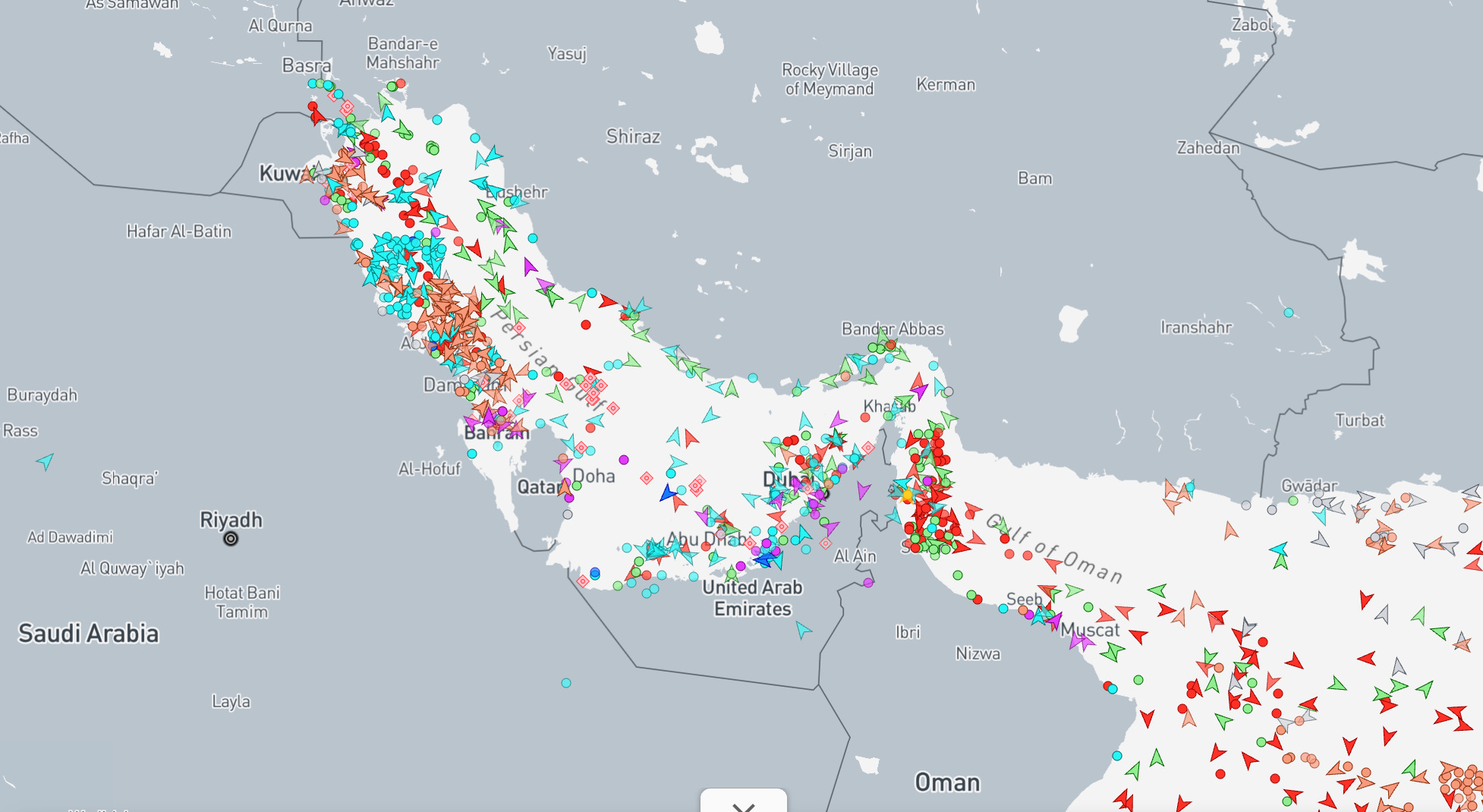
US President Trump has ordered the US Navy to ensure safe passage through the Strait of Hormuz. This will take time to achieve as the primary Iranian threats to shipping come from dispersed, often land-based drones and missiles that will need to be neutralized as part of the US’s broader air campaign against the Iranian military. The sheer volume of vessels transiting the Strait also makes individual maritime escorts difficult to sustain effectively. These operations will become more difficult if Iranian forces are able to deploy its inventory of 5,000-6,000 sea mines to totally close the Strait.
However, a total closure of the Strait of Hormuz may not be a feasible strategy for Iran either. Indiscriminately targeting maritime trade through the region would endanger some of Iran’s top allies, including China, which receives 40% of its oil and 30% of its liquefied natural gas shipments through the Strait.
Prospects for Iranian Victory
The Iranian regime has been brutalized by US and Israeli strikes and any end to the war is likely to see the Islamic Republic’s ability to project power beyond its borders severely degraded for the foreseeable future. Nevertheless, the Iranian regime will consider any scenario in which it survives and forces the US and Israel to end the war short of their ultimate objectives to be a kind of partial victory. Two paths to that outcome are currently foreseeable, through either triggering a global economic crisis by strangling Middle Eastern energy exports, and indefinitely destabilizing the region through a protracted low-level campaign.
Iran Triggers Global Energy Catastrophe That Forces US Retreat
In a March 6 interview with the Financial Times, Qatar’s Energy Minister Saad al-Kaabi warned that a global energy crisis could result in weeks if exports through the Strait of Hormuz don’t resume. While the precise timeline remains uncertain, a prolonged closure of the Strait, combined with broader war-induced disruptions to Gulf energy exports caused by Iranian attacks, could ultimately pressure the US into seeking to de-escalate the war and accept a settlement with the Iranian regime short of its stated goals.
This path to victory is the less likely of the two for several reasons: First, Iran’s capacity for disrupting shipping through the Strait of Hormuz is set to diminish as the US gains greater control over Iranian airspace and is able to use a greater variety of air and naval capabilities to focus on neutralizing threats near the Strait. The coming influx of new counter-drone systems will similarly reduce, though not completely eliminate, threats to critical oil and gas infrastructure in the region.
Second, Iran itself will feel increasing pressure from its own partners to permit traffic through the Strait of Hormuz. Additionally, prolonged closure of the Strait and continued attacks on Gulf energy exports could also see the Gulf States officially join the US military effort, as well as pull additional foreign powers into the war against Iran.
Finally, the US has signaled it is likely to prop up global energy markets at nearly any cost, including by offering additional insurance for ships transiting the Strait, as well as considering permitting a resumption of some Russian oil and gas exports (likely by authorizing more exceptions to October 2025 sanctions on Lukoil and Rosneft and allowing exports to India).
The Regime Refuses to Concede and Prepares Indefinite Campaign of Asymmetric Attacks
The Iranian regime's most plausible path to a partial victory is to concentrate all available resources on political survival while sustaining enough resistance to appear to outlast the US and Israel.
Even if Iran is unable to maintain its more sophisticated long-range ballistic missile strikes or keep the Strait of Hormuz closed, it could still wage a protracted low-level conflict through drones, proxy forces, and cyber attacks on regional critical infrastructure, that over time becomes a severe obstacle to the US’s broader regional interests. If Iran is able to sustain such a campaign for many months—potentially bolstered by Russia—the accumulating costs could compel the US and its allies to seek some negotiated settlement with whatever remains of the regime in order to restore regional stability.
A prolonged conflict would also become a major political liability for the Trump administration going into the midterm elections. The 2026 elections will be highly consequential for the US President, who acknowledges that a loss of control of Congress could lead to his impeachment and possible prosecution. The President will want to avoid the appearance of a new “forever war” in the Middle East that would directly contradict his often repeated promise to avoid prolonged, indecisive foreign entanglements.
This briefing was compiled by Dan White. Dan is an independent foreign policy analyst based in the New York Metro Area. Dan is a former member of The Wilson Center and The Kennan Institute. Dan holds masters degrees from the Johns Hopkins University School of Advanced International Studies (SAIS), the Naval Postgraduate School, and the University of Washington. Dan is a former officer in the United States Army and a veteran of the War in Afghanistan.
For more information, corrections, or comments, please contact dan@opforjournal.com.
Great analysis! Subscribing!!