



A Russian missile struck and set ablaze Kyiv’s Pechersk Lavra during overnight attacks on June 14-15. The Pechersk Lavra, a monastery built in 1051 (predating the founding of Moscow by a century), is the most sacred site in Ukraine and among the holiest sites in Orthodox Christianity. The attack, shocking and odious even by the ruthless standards of the Russian military, reflects a broader Kremlin effort to deliberately target Ukrainian cultural heritage sites in order to eliminate Ukrainian identity.


Russia’s campaign against Ukrainian cultural heritage is reflected in thousands of cases of damage to Ukrainian cultural sites recorded by both the Ukrainian government and international organizations since the Russian full-scale invasion began in February 2022.
Prior to the attack on the Pechersk Lavra, Ukraine’s Ministry of Culture reported that as of “the end of May 2026, 1,913 cultural heritage monuments and 2,573 cultural infrastructure facilities have been destroyed and damaged in Ukraine due to Russian aggression.”
The United Nations Educational, Scientific and Cultural Organization (UNESCO) has also recorded damage to 536 internationally registered Ukrainian cultural heritage sites as of June 10, including “154 religious sites, 280 buildings of historical and/or artistic interest, 41 museums, 33 monuments, 22 libraries, 5 archaeological sites, 1 archive.”
Below is a select list of some of the sites damaged or destroyed and an account of what has already been lost:
Babyn Yar Holocaust Memorial
On March 1, 2022, a Russian missile struck and damaged the Babyn Yar Holocaust Memorial Center and nearby Jewish cemetery in Kyiv. The center is dedicated to commemorating the more than 33,000 Jews that were killed at the site in the Babyn Yar ravine between September 29-30, 1941 in the worst single massacre of Jews during the Holocaust. More than 100,000 total victims were killed at Babyn Yar by the Nazis between 1941 and 1943.
Drobytskyi Yar Holocaust Memorial
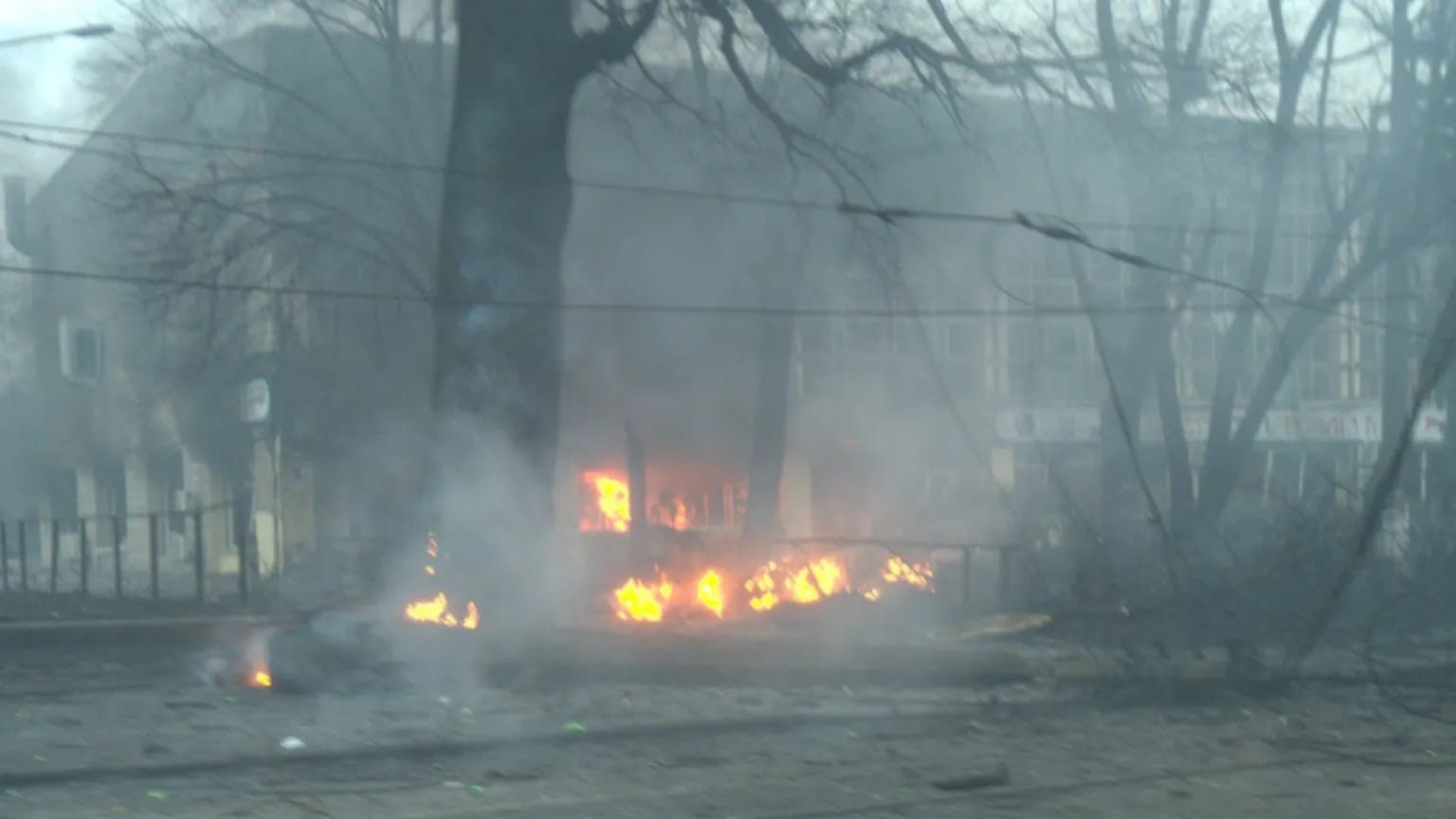
In March 2022, Russian artillery shelling damaged the Drobytskyi Yar Holocaust Memorial in Kharkiv. The memorial commemorates the more than 15,000 Jews who were killed by the Nazis at the Drobytskyi Yar ravine outside the city of Kharkiv in eastern Ukraine in a series of massacres beginning in October 1941.


The National Chornobyl Museum and The National Art Museum of Ukraine
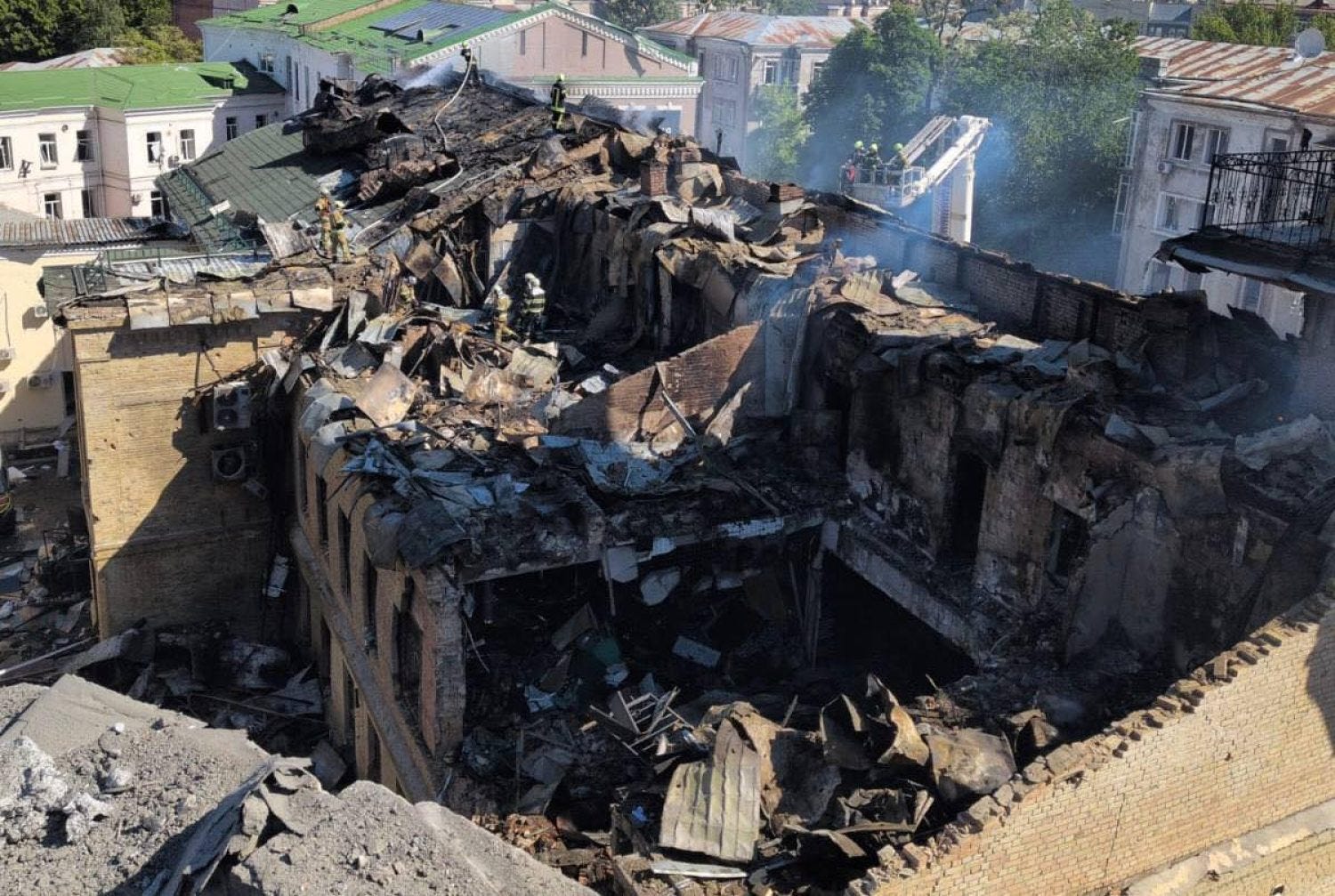
On May 24, 2026, a Russian missile attack destroyed The National Chornobyl Museum. The museum catalogued the Chornobyl nuclear disaster and subsequent emergency response effort and preserved archives of unique historical documents and artifacts related to the events. The museum was destroyed less than a month after it was reopened following the completion of extensive renovations. The attack also caused significant damage to the National Art Museum of Ukraine, the country’s premier museum for Ukrainian visual art.
Additional Russian strikes on May 24 also damaged other Ukrainian cultural sites including the Hinaus Gallery, the Zhytnii Market, the Taras Shevchenko Institute of Literature, the Ukrainian House, and the Kyiv Opera.
Mamai-Mogila Burial Mound Archaeological Site
A September 2024 report by Conflict Observatory identified significant damage to the Mamai-Mogila Burial Mounds in the Vasylivka district of Zaporizhzhia oblast caused by Russian occupation. The Mamai-Mogila are a series of burial mounds up to 20 meters in height constructed by prehistoric civilizations dating back to 3,000 BC. There is additional evidence to suggest that the damage to the site was caused by systematic looting rather than military operations or construction.


Transfiguration Cathedral in Odesa
On July 23, 2023, a Russian missile attack severely damaged the Transfiguration Cathedral in the city of Odesa. Eyewitnesses and evidence collected at the site suggest the Russian missile directly struck the church’s altar. The Transfiguration Cathedral is one of Ukraine’s most culturally significant religious sites, due to not only its aesthetic beauty but because of its connection to Ukrainian religious persecution during the Soviet period. The cathedral, built in the 19th century, was ordered destroyed by Joseph Stalin in 1936, and was rebuilt following Ukrainian independence after the collapse of the Soviet Union.
Mariupol Drama Theatre
On March 16, 2022, Russian forces bombed the Mariupol Drama Theater in the city of Mariupol in Donetsk oblast. The theater, once a prominent local center for performing arts, served as a shelter for hundreds of civilians during the Russian encirclement and sack of the city between February and March 2022. Russian bombing caused the collapse of the building, which killed as many as 600 civilians—mostly women, children and the elderly—who were seeking refuge inside at the time.


Lviv Historic City Center
On March 24, 2026, Russian drones struck and severely damaged the Bernardine Monastery and multiple residential buildings in Lviv’s UNESCO registered central historic district ‘L’viv – the Ensemble of the Historic Centre’ in a rare daytime attack.
Factor Druk Printing House
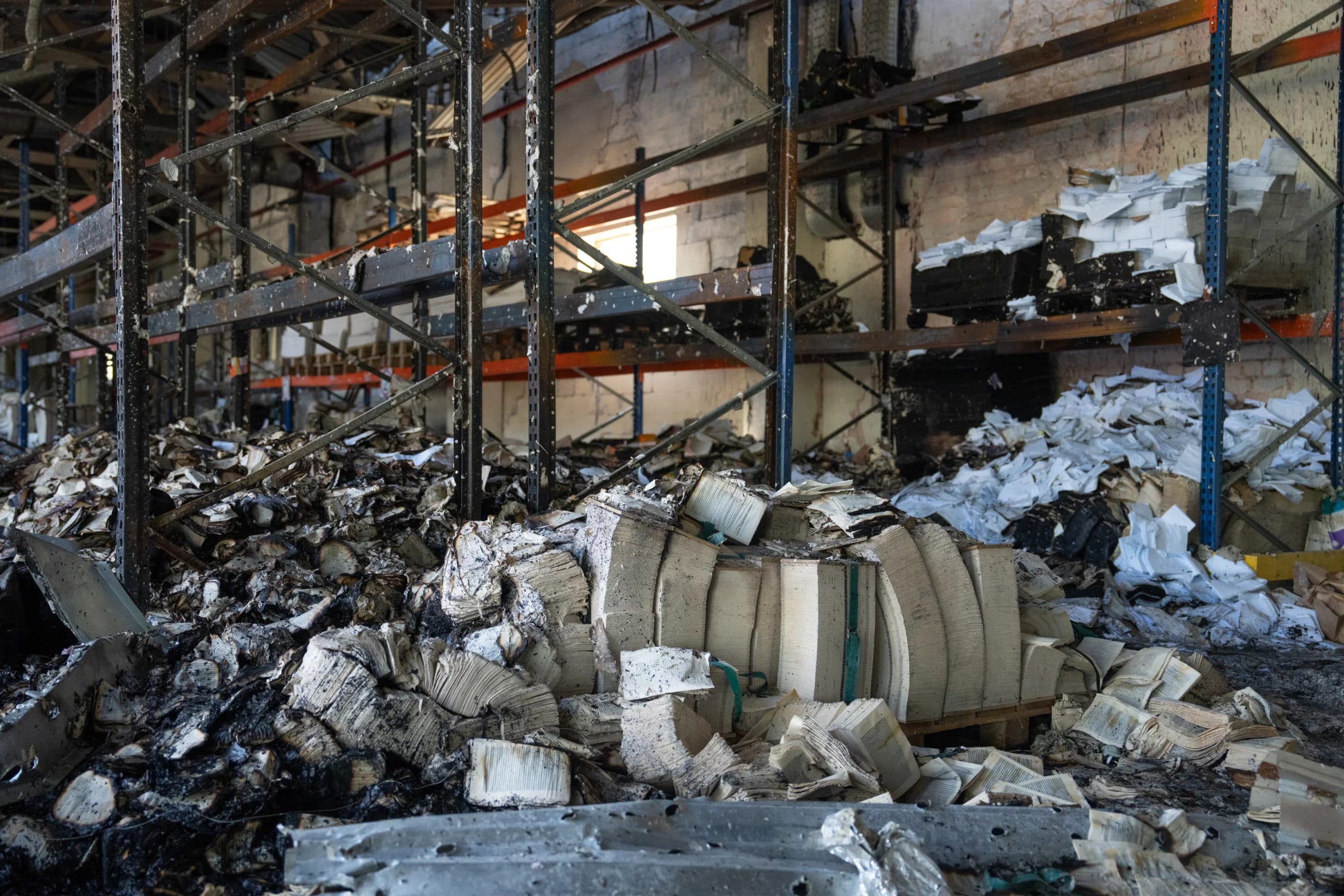
On May 27, 2024, a Russian missile strike severely damaged the Factor Druk Printing House in the city of Kharkiv. Factor Druk is the country’s largest Ukrainian language printing house and one of the largest full-cycle printing houses in all of Europe.
Kherson Art Museum
During Russia’s eight month occupation of the city of Kherson prior to its liberation in the Ukrainian counter offensive of November 2022, Russian forces, led by members of the Federal Security Service (FSB), systematically looted the Kherson Art Museum of more than 11,000 of its 13,500 artifacts. Items looted included priceless works of Ukrainian art, Scythian gold, ancient Greek amphora, World War II artifacts, and even the bones of Prince Grigory Potemkin stored in the museum.


Museum of Local History in Melitopol
An April 30, 2022, report by The New York Times found that Russian forces systematically looted the Museum of Local History in Melitopol, stealing as many as 1,700 artifacts, including 198 pieces of ancient Scythian gold dating back more than two millennia, and a priceless 1,500 year-old golden tiara from the reign of Attila the Hun.

Russia's Broader Campaign: Language Bans, Forced Deportation, and More than 20,000 Abducted Children
The most significant of Russia’s crimes against Ukrainian heritage go beyond damage to historical structures and artifacts. Russia’s war against Ukraine is a war waged for the extinction of the Ukrainian nation and its cultural identity. In territories it has occupied, Russia has moved to outlaw Ukrainian language education. It has shuttered non-Russian Orthodox places of worship. It has routinely subjected local inhabitants to arbitrary detention, torture, sexual violence, and execution for their affiliation with the Ukrainian state and Ukrainian nationalist groups.
Most egregious of all, Russia has abducted as many as 20,601 Ukrainian children, the heirs to Ukrainian cultural heritage. Many of these children have been forcibly transferred to remote parts of Russia and Belarus and impressed into military academies for future service in the Russian armed forces. At least two Ukrainian children have reportedly been sent with a cohort of Russians to the Songdowon communist youth camp in North Korea.
Taken together, Russia’s actions in Ukraine constitute a deliberate and systematic policy of erasure of Ukrainian history, Ukrainian culture, and ultimately the Ukrainian people themselves. It is a policy directly prescribed by the Kremlin: from the ideological treatises of Russian President Vladimir Putin who has declared that the Ukrainian people do not exist, to the “kill lists” drawn up to eliminate Ukrainian nationalists and cultural elites at the start of the invasion, to the constant dehumanizing language used by Russian leaders to describe Ukrainians as Nazis.
The Kremlin’s ultimate war aim is not simply the seizure of Ukrainian territory but the destruction of the Ukrainian people and of Ukraine as an idea—that is to say genocide. The Kremlin is not interested in off ramps or positive incentives and will only abandon this goal when it becomes clear the Russian war effort faces total exhaustion. Until then, it is likely that we will see additional, and possibly even more brazen, Russian attacks.
This briefing was compiled by Dan White. Dan is an independent foreign policy analyst based in the New York Metro Area. Dan is a former member of The Wilson Center and The Kennan Institute. Dan holds masters degrees from the Johns Hopkins University School of Advanced International Studies (SAIS), the Naval Postgraduate School, and the University of Washington. Dan is a former officer in the United States Army and a veteran of the War in Afghanistan.
For more information, corrections, or comments, please contact dan@opforjournal.com.
Russia's economic collapse cannot come soon enough. It's a shame the current Trump administration is unsupportive of the Ukrainian cause.