



This brief highlights significant developments in Chinese, Russian, Iranian, and North Korean defense innovation and defense industrial capacity observed between September 15, 2026 and October 15, 2026.
DEFENSE INNOVATION
Developments in advanced military technologies
I. LONG-RANGE PRECISION STRIKE
Significant developments involving ballistic and cruise missiles, long-range attack drones, integrated fire support complexes, and hypersonic weapons.
Ukraine Identifies Upgrades to New Russian Geran-4 Drones
On October 5, 2026, Ukraine’s Main Intelligence Directorate (HUR) released new technical details describing upgrades to Russia’s jet-powered Geran-4 drone. The upgrades include a new specialized shaped charge for striking bridges and powerlines;1 the replacement of a Chinese Telefly turbojet engine with a domestic alternative; and new components to support autonomous navigation such as the “MOKh” magnetometer and “Susanin” electro-optical correlation system.
Ukrainian Intelligence Assesses Russia is Modifying its Kinzhal Missiles with New Warheads
Ukraine’s Main Intelligence Directorate (HUR) announced on October 12, 2026, that Russia is developing a new high-explosive fragmentation warhead for its Kinzhal air-launched ballistic missile as an alternative to its high-explosive penetrator warhead. HUR assesses the new warhead may be a stopgap solution for persistent problems with the missile’s accuracy that have called into question its use in precision attacks on hardened structures.
Iran Claims Test of Ballistic Missile on Moving Target
Brigadier General Ali Balali, a senior officer in the Aerospace Forces of the Islamic Revolutionary Guard Corps (IRGC), told Fars News on October 1, 2026, that IRGC units had successfully tested a ballistic missile capable of hitting a moving target.
Iran Claims Use of New Anti-Ship Missile with Cluster Warhead
On September 19, 2026, Mohsen Rezaei, the Secretary of Iran's Supreme National Security Council, told Al Jazeera that the Iranian military launched a new type of anti-ship missile armed with cluster munitions at a US aircraft carrier in a recent attack. IRGC newspaper Javan suggests the attack, involving a variant of the Qasem Basir missile, targeted the USS George Washington and a guided missile destroyer without effect on September 5.
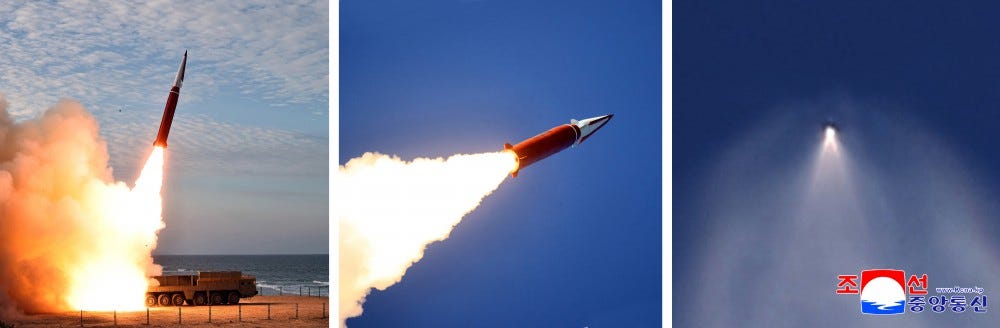
North Korea Conducts Multiple Tests of Apparent Hypersonic Missile
North Korea conducted tests of “new type” missiles on September 20, 2026 and October 3, 2026. Photos from both launches released by Korea Central News Agency suggest the missiles were Hwasong-11Ma (aka Hwasong-11E-1), equipped with a hypersonic glide vehicle.
II. AIR DEFENSE
Significant developments involving air and missile defense and counter-UAS systems.
Russia’s Rostec Reports Delivery of “Zubr” Automated Anti-Drone Systems
On September 22, 2026, Russian defense conglomerate Rostec reported the delivery of Zubr automated counter-UAS systems. The system provides protection from low-flying drones with four 7.62mm machine guns that are directed by an automated system of onboard optical units and radar systems. According to Rostec, the system serves as a last line of defense against UAS as part of broader integrated air defense systems.
Test of Rostec’s Zubr air defense system. Source: Rostec via Novorossia Militia Reports Z.O.V. (@swodki) on Telegram.
Russia’s Ministry of Defense Reports Test of Counter-UAS Laser
On October 2, 2026, Russia’s Ministry of Defense reported that units of the Russian army tested the “Zarya” counter-UAS laser system during the “Center 2026” military exercise. The system was used to “destroy medium and heavy enemy drones at a range of up to 6 km.”
Russia Developing System to Jam Starlink-Connected Drones
According to reporting in Izvestia on October 7, 2026, Russian company JSC NPP and the government-affiliated Russian Foundation for Advanced Research Projects are jointly developing an electronic warfare (EW) system named “Yastreb-S” to jam Starlink-connected drones. The system operates through a wide-area jamming of all frequencies between 100 MHz to 15 GHz that Starlink-equipped drones are believed to operate on. The system also has the ability to intercept video feeds of targeted drones, allowing for its use as a limited signals intelligence collection platform.

China Testing “Iron Triangle” Concept to Counter Drones
On October 4, 2026, China’s Global Times reported that the People’s Liberation Army’s 75th Group Army conducted live-fire exercises in the Gobi Desert, involving an “Iron Triangle” of kinetic, laser, and microwave anti-drone systems. Counter-UAS units of the 75th Group engaged a simulated drone swarm with an array of different capabilities. According to the Global Times quoting CCTV, “Counter-drone units activated ground-based laser and microwave systems, using optical dazzling and electromagnetic suppression to disrupt the swarm’s formation. Interceptor drones took off to engage targets that broke through, followed by anti-aircraft gunfire against the remaining drones.”
China Showcases New Anti-Drone GPS Jamming System
China showcased the RDN-506 Global Navigation Satellite System (GNSS) jamming device at the 14th China International Defense Electronics Exhibition in Beijing on September 15, 2026. The RDN-506 is designed to detect incoming tactical drones at a range of up to 20 km and then disrupt their navigation by jamming their satellite connectivity.
III. NAVAL SYSTEMS
Significant developments involving advanced manned and unmanned naval surface and subsurface vessels and maritime security systems.
Imagery Suggests China is Developing a Mothership for Giant Unmanned Submarines
A September 15, 2026 article in Naval News by H.I. Sutton assessed that a new mystery vessel spotted under construction at China’s Hudong-Zhonghua shipyard in Shanghai appears to be a “mothership” capable of deploying giant submarine drones. The characteristics of the vessel’s superstructure suggest the presence of an internal hangar capable of housing up to four XXLUUVs (extra-extra large uncrewed underwater vehicles).
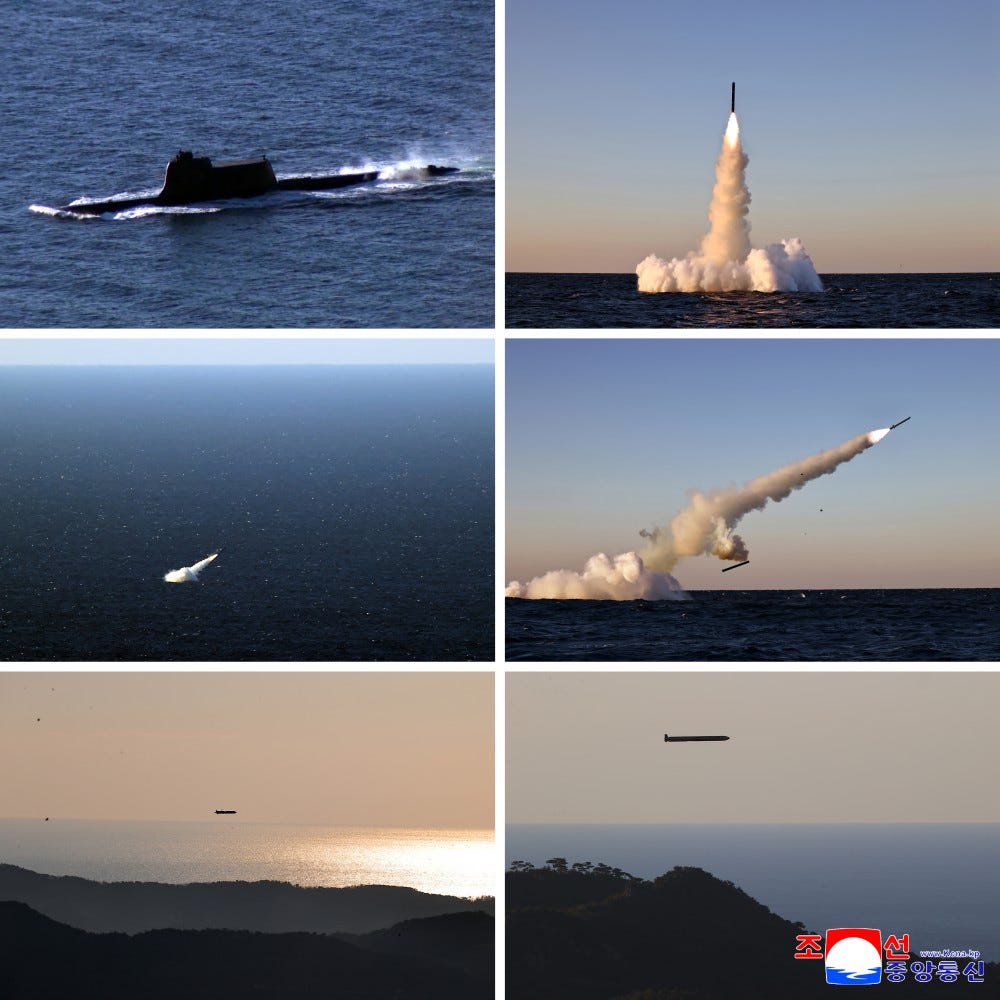
North Korea’s Hero Kim Kun Ok Sub Test Launches Strategic Cruise Missiles
On October 14, 2026, North Korea fired two submarine-launched strategic cruise missiles from its Hero Kim Kun Ok submarine into the East Sea (Sea of Japan). This event was the first submarine-launched missile test North Korea has conducted since January 2024.
The Hero Kim Kun Ok is a 3,000-ton nuclear attack submarine first unveiled in September 2023.
IV. COMBAT AVIATION
Significant developments involving large manned and unmanned military aircraft including bombers, fighters, helicopters, aerial command and control systems, as well as aerial sensors and electronic attack and logistics aircraft.
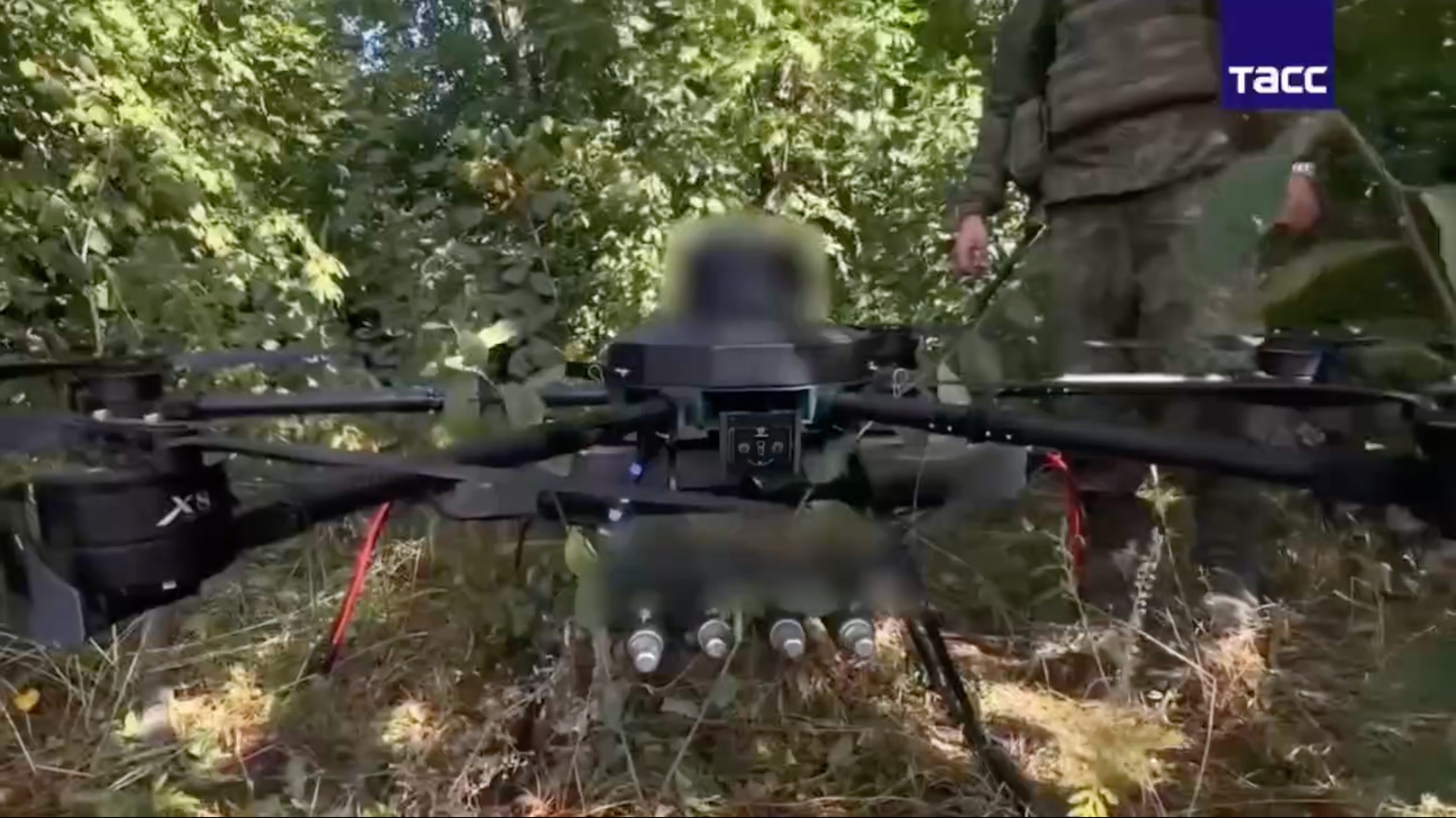
The Russian Military Highlights Use of “Mangas” Heavy Bomber Drones
On September 18, 2026, the Russian military announced units of the 11th Army Corps had begun using new “Mangas” heavy hexacopter drones to bomb Ukrainian forces and deliver supplies to front line positions. An investigation by Ukrainian open-source intelligence organization InformNapalm has found, however, that Mangas are not actually new and were first introduced in 2025 as a response to Ukraine’s widely used Vampire (Baba Yaga) bomber drones and have seen comparatively limited combat usage.
The Russian Air Force Receives New and Improved Su-57 Fighters
United Aircraft Corporation (UAC), a subsidiary of Russian defense conglomerate Rostec, announced on September 24, 2026, that it had delivered a new batch of Su-57 fighters to the Russian Aerospace Forces. The new aircraft were reportedly delivered in a “new technical configuration” that would expand the range of combat tasks the aircraft could support. The exact nature of improvements were not detailed, but previous announcements by Rostec suggest the upgrades could be aimed at improving collaboration with strategic drone systems.
V. NEXT GENERATION GROUND FORCES
Significant developments involving next generation manned and unmanned military vehicles, fire support systems and other advanced ground-based tactical and operational systems.
Russian Forces Practice Airdropping “Courier” Unmanned Ground Vehicles
On October 2, 2026, Russian paratroopers practiced airdropping “Courier” unmanned ground vehicles (UGVs) from Il-76 aircraft as part of the “Center 2026” military exercise. The vehicles were allegedly recovered and deployed within 5 minutes of landing. Once deployed, the Couriers engaged in a variety of reconnaissance, fire support, and logistics tasks to support assault troops and secure the airfield.
Previously, on September 19, 2026, Courier manufacturer NRTK announced field tests for an upgraded “Courier 2.0” model with improved fire control and navigation systems.
Performance test of “Courier 2.0” UGVs Source: NRTK (@stormdron) on Telegram
Russia’s Rostec Announces Readiness to Sell New “Nerekhta” Unmanned Ground Vehicle
On October 8, 2026, Rosboronexport, the export arm of Russian defense conglomerate Rostec, announced its readiness to sell new Nerekhta-E UGVs to international customers. The Nerekhta-E is a modular tracked vehicle that can be equipped with a variety of weapons including small arms, grenade launchers and anti-tank and anti-air missiles. The vehicle can reach speeds of 20 km/hour and remain in motion for up to four hours. It can operate as a stationary surveillance platform for up to 20 hours.
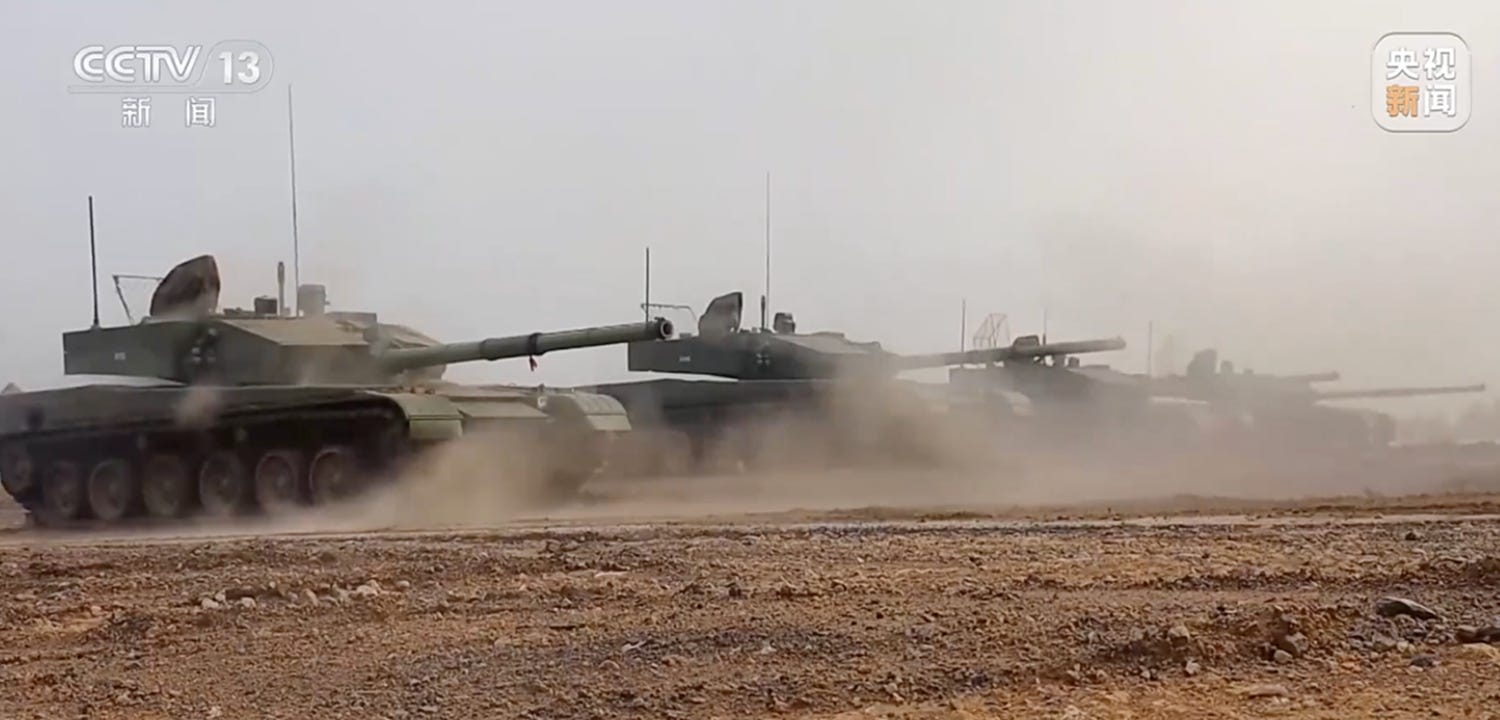
China’s 80th Group Army Conducts Live-Fire with New Type 99B Tanks
On September 16, 2026, Chinese state media outlet CCTV aired footage of the People’s Liberation Army’s 80th Group Army conducting live-fire exercises at a training area in Shandong Province with its newly fielded Type 99B tanks. The Type 99B, which debuted at the September 3, 2025 Victory Day parade in Beijing, is an upgraded variant of the third-generation Type 99A main battle tank.
VI. FRONTIER TECHNOLOGIES: MILITARY AI AND SPACE-BASED MILITARY CAPABILITIES
Significant developments involving the military applications of next-generation technologies including artificial intelligence (AI) and space-based systems.
China Creates New College Dedicated to Autonomous Systems
On September 30, 2026, the People’s Liberation Army Engineering University announced the establishment of a new College of Unmanned and Intelligent Engineering dedicated to studying applications of AI and autonomous systems in warfare.
Russia Launches Combat Data Platform to Train Military AI Systems
On October 12, 2026, Russian Deputy Defense Minister Dmitry Shcherbinin announced the launch of a platform for sharing combat data, specifically related to first-person view (FPV) drone footage, with defense technology developers to train their autonomous systems. More than 40 organizations are reportedly already using the platform.
Russia Launches New Classified Military Satellite into Orbit
On September 17, 2026, the Russian Ministry of Defense announced the launch of a Soyuz-2.1B rocket from Plesetsk Cosmodrome in Arkhangelsk Oblast. The rocket deployed a classified spacecraft believed to be a Glonass-K next-generation satellite, or a Starlink analog “Rassvet” satellite.
INDUSTRIAL CAPACITY
Developments related to the generation of defense industrial production
I. PRODUCTION AND OUTPUT
Significant developments involving the expansion or upgrade in defense industrial facilities and production lines.
Russia Plans New Carbon Fiber Processing Facilities to Scale Drone Production
On September 20, 2026, Politico reported that leaked documents from Russian state-owned company Rosatom showed plans to expand its Alabuga-Volokno factory in Tatarstan’s Alabuga Special Economic Zone to process an additional 500 tons of aerospace carbon fiber by 2029. The increased production would allow the Russian defense industry to create airframes for an additional 28,000 Shahed/Geran drones per year—representing at least a 70% increase from its current estimated production of between 36,000 and 40,000 units per year.
North Korea Building at Least Two New Warships Amid Signs of Production Surge
A September 25 report by NK News has identified the construction of hulls for two as yet unidentified North Korean warships beginning in early July at the Nampho Shipyard on the country’s west coast and in mid-August at the Chongjin Shipyard on its east coast. The hull for the ship at Nampho appears larger than previously constructed 5,000-ton Choe Hyon-class destroyers, suggesting the development of a 10,000-ton destroyer previously announced by Supreme Leader Kim Jong-un.
The report also identified evidence of new worker camps visible at the Nampho, Chongjin, and Rajin shipyards in recent months, suggesting an effort to upgrade shipyard facilities as the ships are being constructed.
II. RESILIENT SUPPLY CHAINS
Significant developments involving the strengthening of defense industrial capacity to anticipate, endure and adapt to disruptions.
Russia Building Underground Drone Factories at Alabuga
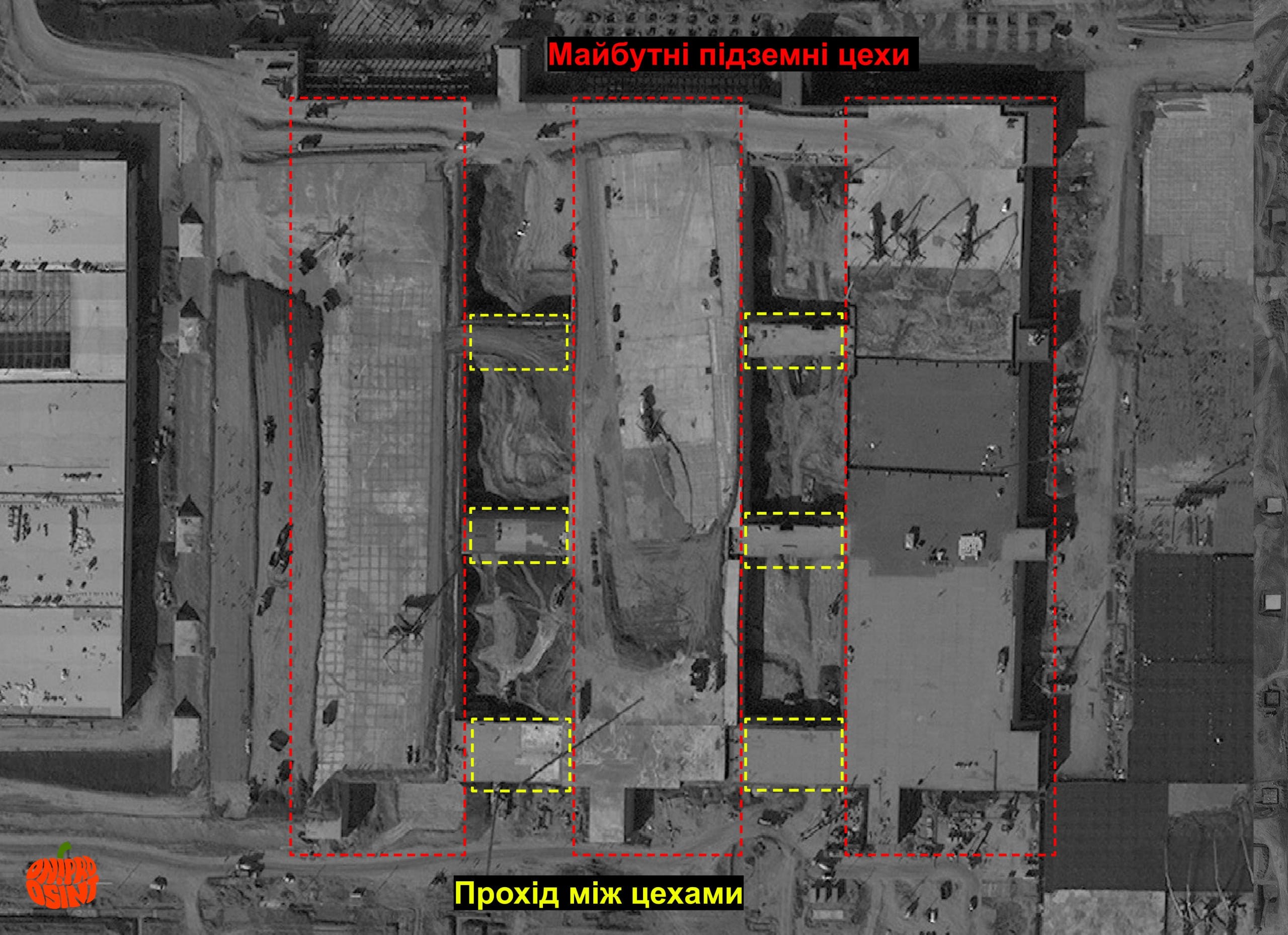
New satellite imagery published by Ukrainian open-source intelligence project Dnipro OSINT on September 19, 2026, shows that Russia has begun construction of large underground facilities at its Alabuga Special Economic Zone in Tatarstan. The new structures, assessed to provide approximately 42,000 square meters of floor space, are likely underground production facilities for Shahed/Geran drones. The development of underground facilities would help protect Russian drone production from increasingly intense Ukrainian strikes.
III. BLOC DEFENSE COOPERATION
Significant developments involving defense industrial cooperation between Russia, China, Iran, and North Korea.
Up to 25,000 North Koreans Helping Russia Build Drones
The Multilateral Sanctions Monitoring Team reported on September 16, 2026, that as many as 25,000 North Korean overseas laborers are employed in Russia to build Shahed/Geran-type attack drones. The report alleges that the laborers have been imported into Russia under student visas, and employed in the Alabuga Special Economic Zone and other areas of drone construction.
China Provides 1,300 Shipments of Dual-Use Technology to the Iranian Military
A Wall Street Journal investigation published on September 23, 2026, found that China has provided approximately 1,300 shipments of dual-use technologies to Iran in the first six months of 2026. The technologies shipped from Chinese companies to Iran's Ministry of Defense and Armed Forces Logistics include GPS devices, electric motors, aircraft engines, and chemical precursors that may be used in missile and drone development.
This briefing was compiled by Dan White. Dan is an independent foreign policy analyst based in the New York Metro Area. Dan is a former member of The Wilson Center and The Kennan Institute. Dan holds masters degrees from the Johns Hopkins University School of Advanced International Studies (SAIS), the Naval Postgraduate School, and the University of Washington. Dan is a former officer in the United States Army and a veteran of the War in Afghanistan.
For more information, corrections, or comments, please contact djwhite155@gmail.com.
Also known as a “cumulative cutting warhead”, a term introduced by Ukrainian Presidential Advisor Serhii "Flash" Beskrestnov on September 30, 2026.